Seoul/Hokkaido/Tokyo | 2025
Amidst a somewhat turbulent last couple of weeks of work, December 19th came, and it was time to take what I plan each year, a two-week vacation. I started this annual routine in 2021 with Thailand, then Japan, Mexico, and last year, Central America. The trips are meant to expose me to different cultures and open my mind: see how different cities' buildings look, take in their museums, observe customs, how people eat, pray or how each culture chooses take rest & relaxation. With a fondness for Asian culture, it was time to get back there, and so this is where this year’s journey takes us.
*If you have no intent to ever check out Seoul, and want to jump ahead to the Japan part, do that by scrolling down to Day 6.
Day 1 (Seoul)
Flew out of LAX Friday morning on an Asiana Airlines flight, the other Korean Airline, which turns out to have just been absorbed by Korean Air. For me, these long, approximately 13-hour flights to Asia are made quite pleasant by the stewardesses, who I find remarkably polite, attentive, and beautiful. Incheon Airport is a considerable distance from Seoul's center. Two perfectly easy options are either the high-speed train or the express bus. A bit faster is the train, but if you have larger luggage and aren’t staying walking distance from Seoul Station, where the train lets out, the bus is a better option, making more stops and giving you a better chance of walking to your hotel. We were staying in Insadong, a central area known for teahouses, art galleries, and shopping. The Sunbee was an 8-story building with a handful of rooms per floor, each with minimal, oak-looking furnishings. A favorite feature is the radiant-heated floors and soft lighting, and I found it to be perfectly acceptable and inviting accommodations — not fancy but thoughtful and cool. A bit tricky finding the hotel, as it takes an adjustment realizing that what you think is not a street, and just an alleyway, is in fact the street you should be turning on. To that, so I don’t forget, the best way to get around the subway and bus system is not Google Maps, but Kakao Map (we learned this a bit of the hard way).
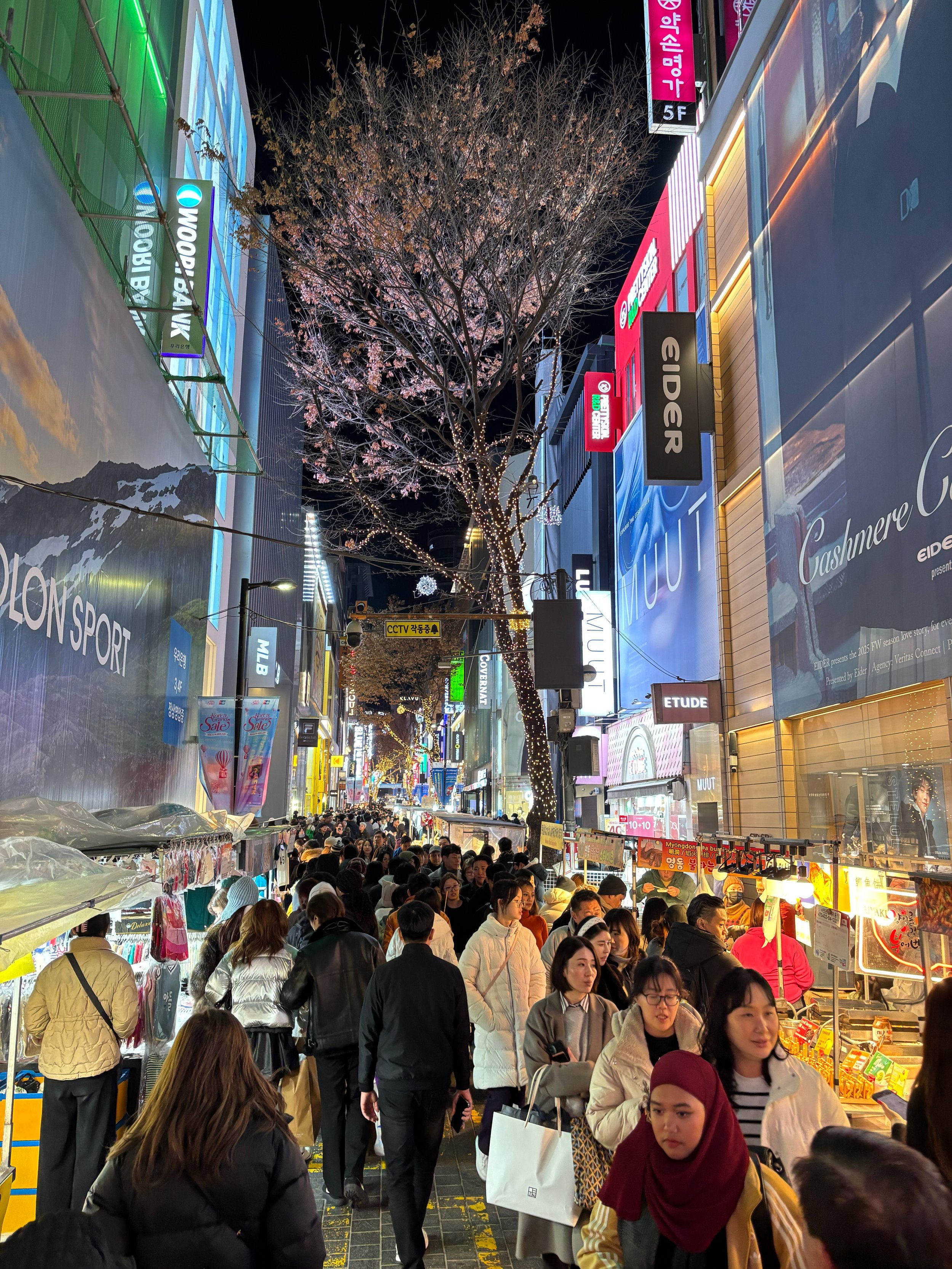
Although we had been up and travelling for 20 hours, we knew staying up and acclimating to local time was important. So we headed out for dinner and an evening of walking around. Found a spot serving what I love, which are “knife-cut noodles, called Kalgukso. It’s a soup, and we enjoyed that with a lightly battered and fried green veggie pancake and, of course, kimchi, usually not my favorite, but this one was good. Not too far from Myeongdong, a happening neighborhood in central Seoul, we walked that way, headed to the night market, but were lured in by the sounds of jazz coming from a stylish cocktail lounge. The staff, all in suits, found a spot for us at the bar, and I enjoyed a delicious Guinness on tap, and Deanna a creamy bamboo liquor cocktail that came out on a tray, clouded in dry ice smoke. Check it out here: Ghiwon 22
This night market, with clothing stores, goes until late. In front, along the narrow road, another row of shoulder-to-shoulder food vendors making everything from grilled meat to shaped fried pastries. Then, having hit a wall, hoped in an Uber to get back to bed and wrap up day 1.
Day 2
Got off to a dreadful start, as I smashed the back of my head against a concrete floor topped with wood. From what I am only able to presume, I woke pre-dawn to use the restroom and, either on the way to or from—while to some extent sleepwalking—had either tripped and/or mistaken the futon on the floor for our bed. While coming down still relaxed and just as you would when normally lying on a bed, I threw my head back--assuming a couple of pillows were there to catch it. In what has been the most brutal knock to my head ever, I was badly rattled by the impact, coupled with a bruised elbow.
Lesson: In a foreign room, especially if you have been tanking back water for 24 hours, leave a little light on and clear your path before bed.
With the care of Deanna, and despite a slight dizziness, we got out and going with a jolt of espresso and a very brisk morning walk around the two palaces next to Insadong: Changdeokgung and the neighboring Changgyeonggung palace, which are abutting. Once a single palace ground, they were the king’s residence during the 15th-century Joseon dynasty, but were later separated and turned into a park during Japan’s occupation. The woodsy, hilly surroundings make these two palaces a great 1–2 hour walking tour. And if you’re not staying near or planning to visit the surrounding Insadong area again, now is a worthwhile time to do that. A very pedestrian-friendly area, loaded with tea houses and bars/restaurants, would be a nice spot for morning coffee, lunch, or happy hour.
In store for the remainder of the day was shopping, so we took an Uber for a 30-minute drive to Seongsu, which could be called the Abbot Kinney of Seoul. Hip, trendy, and young, this half-mile-wide, one-mile-long grid of streets was teeming with the coolest-looking Koreans going in and out of stylish apparel shops. Think that whole baggy pants, boots, lovely wool sweaters, and trench coats. Close to the Han River, the area seems to have been an old warehouse district, reminding me also of the Arts District in LA or Soho in New York. An area that you’ll notice it’s not uncommon to find young Korean men with a bit of face makeup to give some color to the lips and accentuate the jaw and eyes. Can you say K-pop? What was most surprising was seeing a young serviceman in army fatigues sporting that look.
The coffee shops in Seoul are next level, and all seem to have plenty of customers. They are beautiful spaces that seem to be taking on an Apple Store-like design, and in one of those, we began to warm up. After a couple of hours in popping into shops, we lucked upon a spot for lunch called Shabu in Seoul, which was incredible. We had the spicy tomato broth with two kinds of beef and veggies. In true Korean fashion, they finished our meal by using the leftover broth at the bottom of the bowl to make a table-side risotto. Filled with cream, more tomato, and a bit of parmesan on top, it was truly decadent. Having observed Korean culture more closely over the past two years since being with Deanna--a Korean American-- I found the reuse of soup broth accurate to the culture, as Koreans are very industrious. People pushed down and held back during the occupation of the Pacific War; Koreans appreciate what they have and are not wasteful. Though in recent decades it’s been catapulted into one of Asia's wealthiest societies, a dichotomy persists.
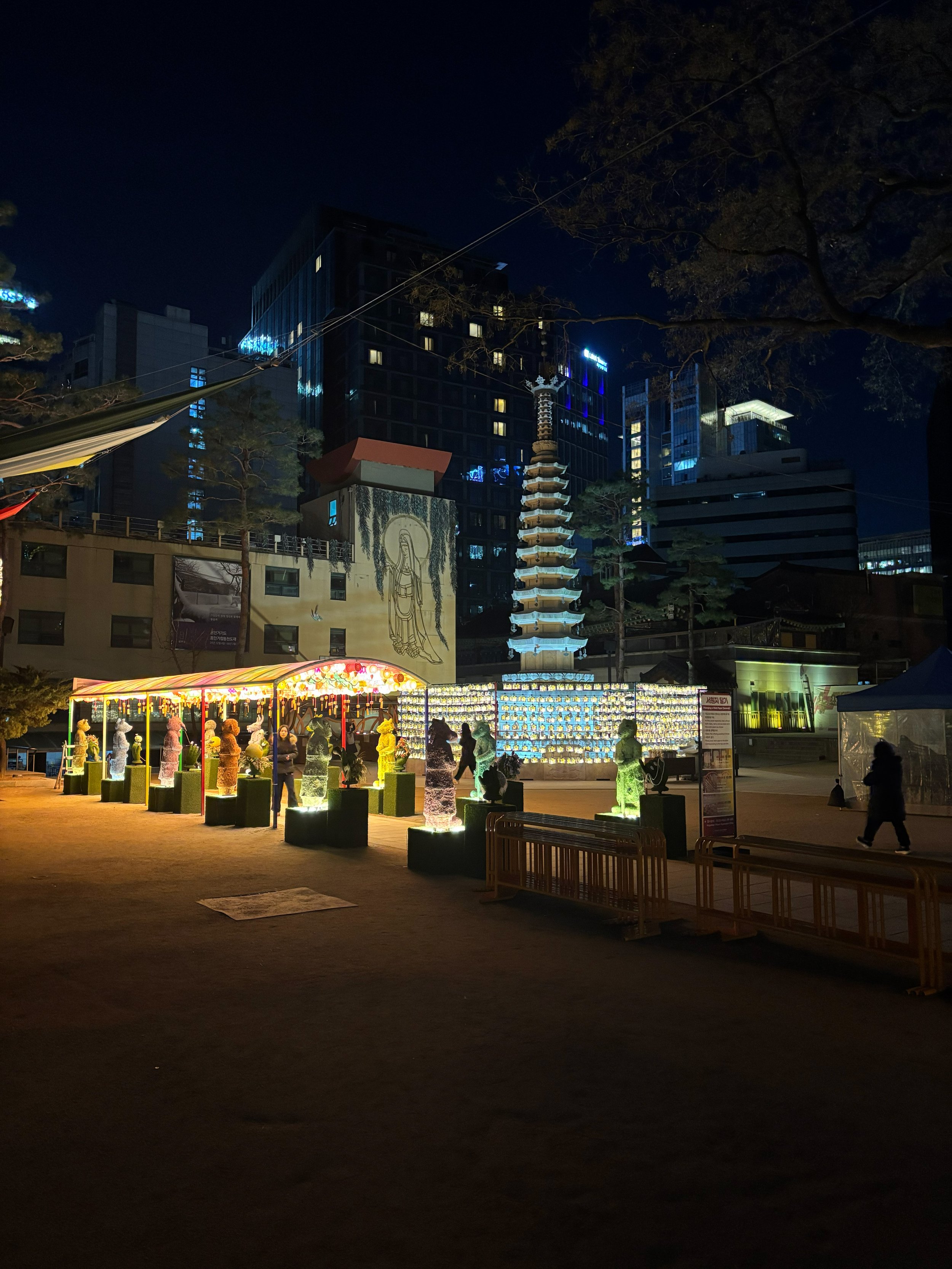
On our first subway ride back to near Insadong, we got out at Seoul Station and walked into City Hall, a bow-like interior rising from verdant balconies, enclosed by a glass-panellled shell. That night, on another evening walk, we were gifted with coming across this Buddhist temple with these two rows of fuzzy, colorful lunar zodiac animals down by the lit-up pagoda
Day 3 (Topography and Tofu)
We began the morning with a bus ride to the National Museum of Korea. It’s a staggering space, both in its architecture and the depth of history it holds. Afterward, we made a quick detour to Seoullo 7017 near Seoul Station. While the idea of turning an old 1970s overpass into a "sky garden" sounds great on paper, in reality, it felt a bit underwhelming—definitely a "skip" if you’re short on time.
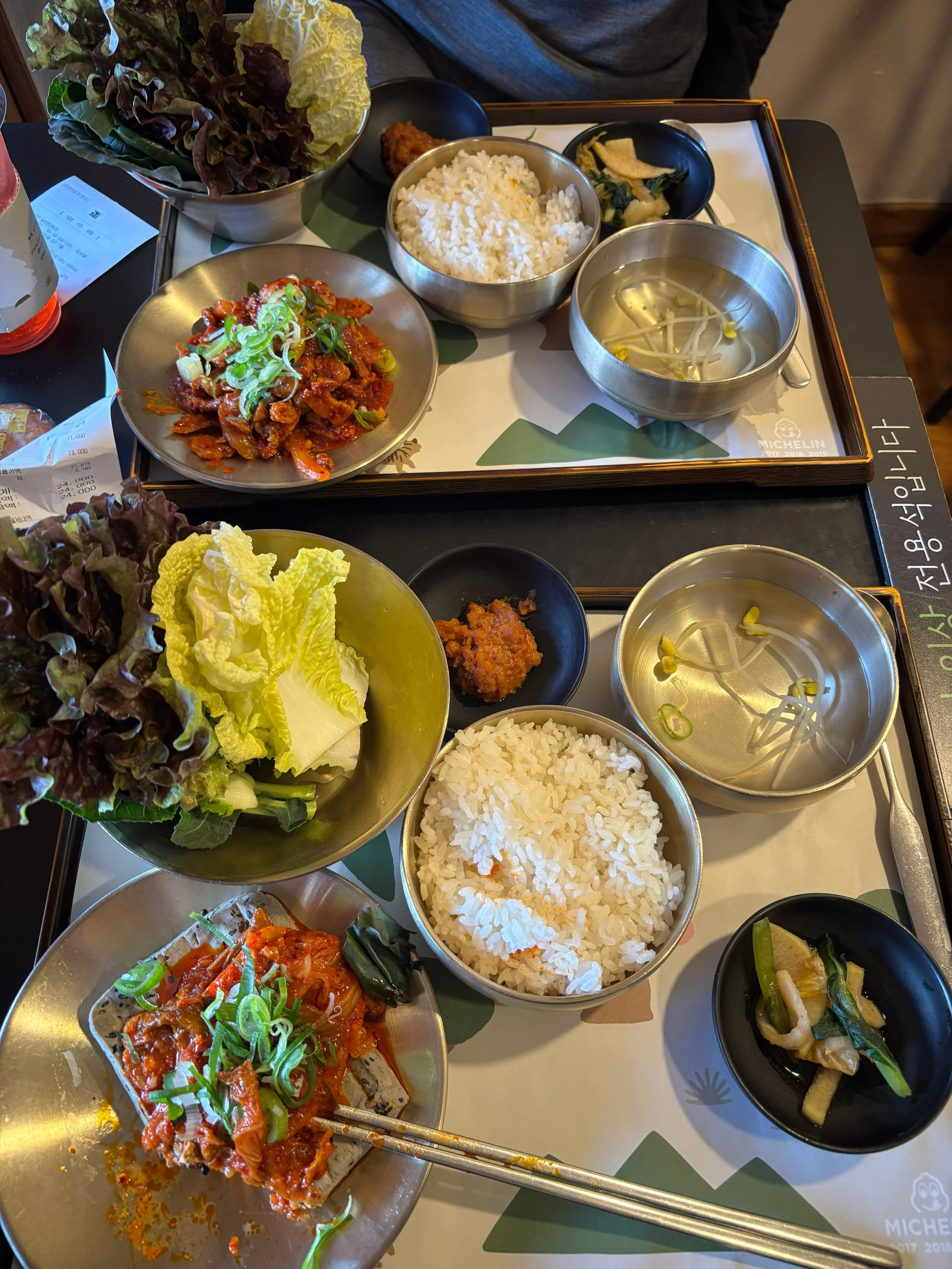
On our way to the Namsan cable car, and after a handful of missed attempts to pin down the right spot for lunch, Deanna called it with this gem of a spot. In a Chinese-style traditional-looking building, and serving the most memorable healthy and fresh bites of the trip, highly recommended Mokmyeoksan Horaengi, who very casually serve thick slabs of fresh tofu, smothered in tangy kimchi, and wrapped in crisp lettuce with a dollop of pungent, fermented soybean paste (which maybe you have had with Korean BBQ before). The meal was simple, rustic by nature, and perfectly executed.
From there, we headed up Namsan Mountain, which is an absolute must-visit. It provides the perfect vantage point to understand the city's bagel-shaped geography. Seoul literally encircles the mountain, which you could call the whole in the bagel's middle, and from the peak, you realize how much the topography has dictated the city's growth.
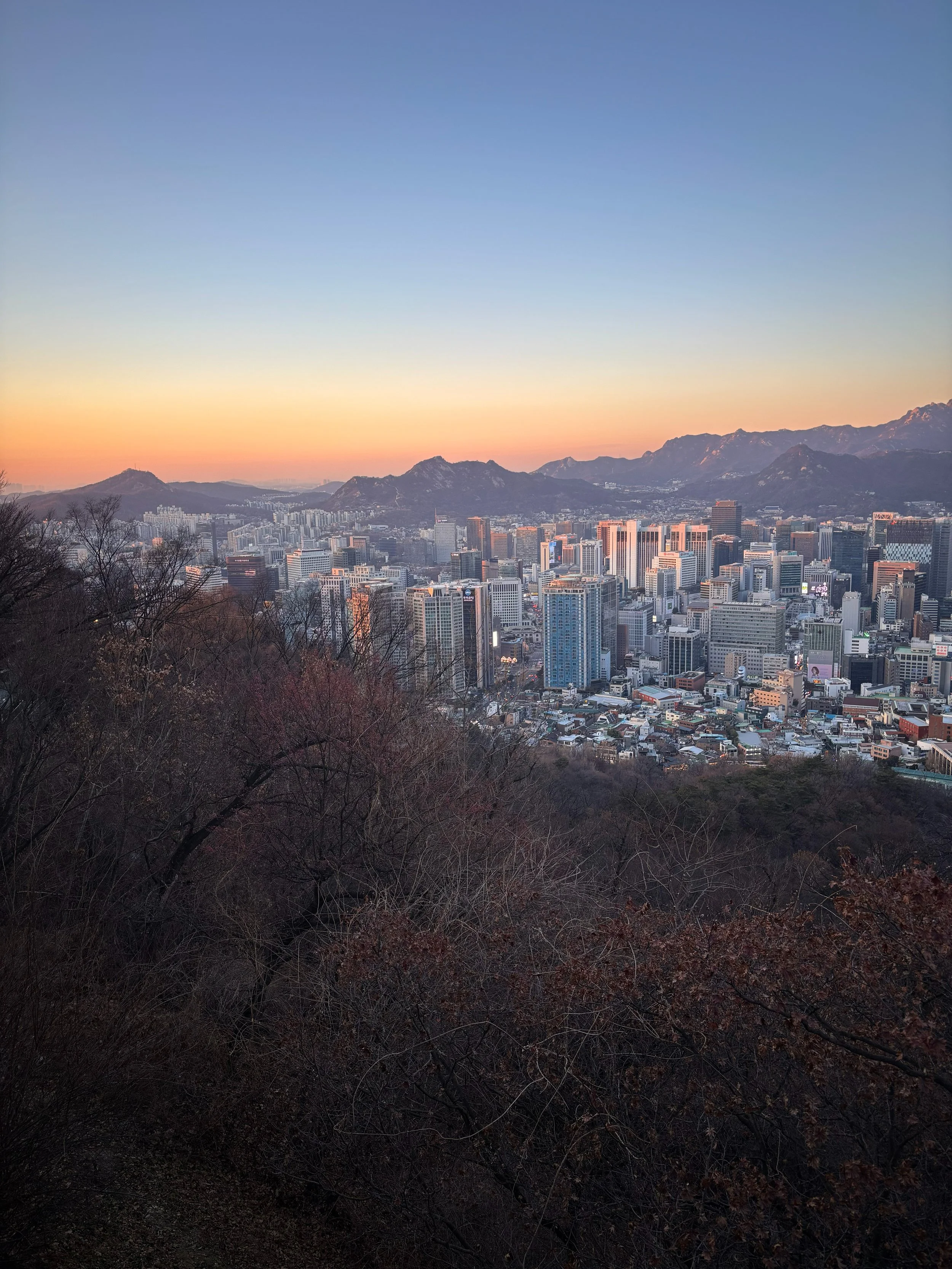
The landscape forces the urban sprawl to weave itself into the terrain, filling every valley and flat divot where the earth allows for a foundation. The result is an endless, shimmering spiral of architecture that houses Seoul’s 12 million residents—a sea of concrete and glass perfectly fitted into the folds of the mountains.
Day 4
This morning, we started with a 30-minute bus ride south to check out the Leeum Museum of Art, which, at the time of our visit, featured three halls: modern world art, traditional art, and a special exhibit. The museum itself is a lovely modern building in the Hannam neighborhood, which you could compare to Williamsburg, Brooklyn, but with a Parisian flair, especially given the small, winding blocks nestled into a hilly part of town. There are lots of boutiques, coffee shops, and cool, creative offices.
After the Leeum, we checked out one of Deanna’s friends' café/bar, located in the same building where they have a successful production company’s office and studio for creating music videos, commercials, and the like. It’s an open, high-ceiling space with a long counter bar featuring turntables and running the entire width of the space, and behind it is a giant, sports-stadium-sized, white-light box. If in Hannam, pop in, its a cool vibe.
On our route further south, below the Han River to Gangnam (yes, made famous by the most fun poppy and uplifting song (if you haven’t heard it in a while, please have some fun and hit that right now and here - Gangnam Style).
Headed to meet Deanna’s aunt for lunch, is where I went wrong relying on Google Maps and took a bus going the wrong way, which taught us it’s better to use the Kakao app while in for Seoul navi.
At night, we met up with friends David and Hemy. First on the docket was a Christmas market, at the base of the sixth-tallest building in the world, Lotte Tower is a towering 123-story, gerthy behemouth that looked ominous under the rainy sky. After a beer and german style sausage (no so Korean need I say) at the kinda cheesy X Mas market I chimed in, having skipped lunch, and asked where we could find a great Korean fried chicken place. Well, here it is “THE SPOT”. The night kept getting layered onto, guided by our friend David Moon, a Korean American born in California. At nearly 30 years old, after visiting a friend in Seoul and feeling that he truly thrived there, he decided to emigrate. Since then, he has married a local woman and welcomed a baby a year ago. David, who is supposedly always this energetic, bounced us around from spot to spot, adding in between the market and friend chicken a bagel shop that leaned heavily into a olde London-style newspaper branded theme and had lines out the door.
Doing our best to keep pace with David, who in no way was fazed by the drizzling rain, he bounced us around town with his toddler slung into a kind of BabyBjörn chest pack holster. After enjoying a whole piece of the chicken, along with wings and fried chicken skins, we did a repeat on the whole chicken, finished our beers, and called it a night. A good reminder that no matter where you are travelling, its always great to hang with the locals.
Day 6
Day five, the 24th, was a travel day with a 2.5-hour flight, but with all the little transit connections, turned into an entire day. As we did when we arrived in Seoul, we took a coach shuttle bus to Incheon Airport for a flight to Sapporo. Hearing that the ramen at Sapporo Airport is incredible, we didn’t fully exit upon arrival; instead, we headed to the departure floor. Choosing which ramen shop to visit from the dozen in what they call the Ramen Dojo, we decided based on which one was busiest. I had a simple salt broth, which was good, and the noodles were firm.
Then we ran into a hiccup: we couldn’t pick up the rental car from Alamo because we didn't have an international driver's license. So we hopped back on a shuttle to the terminal, then took a 90-minute train to Otaru.
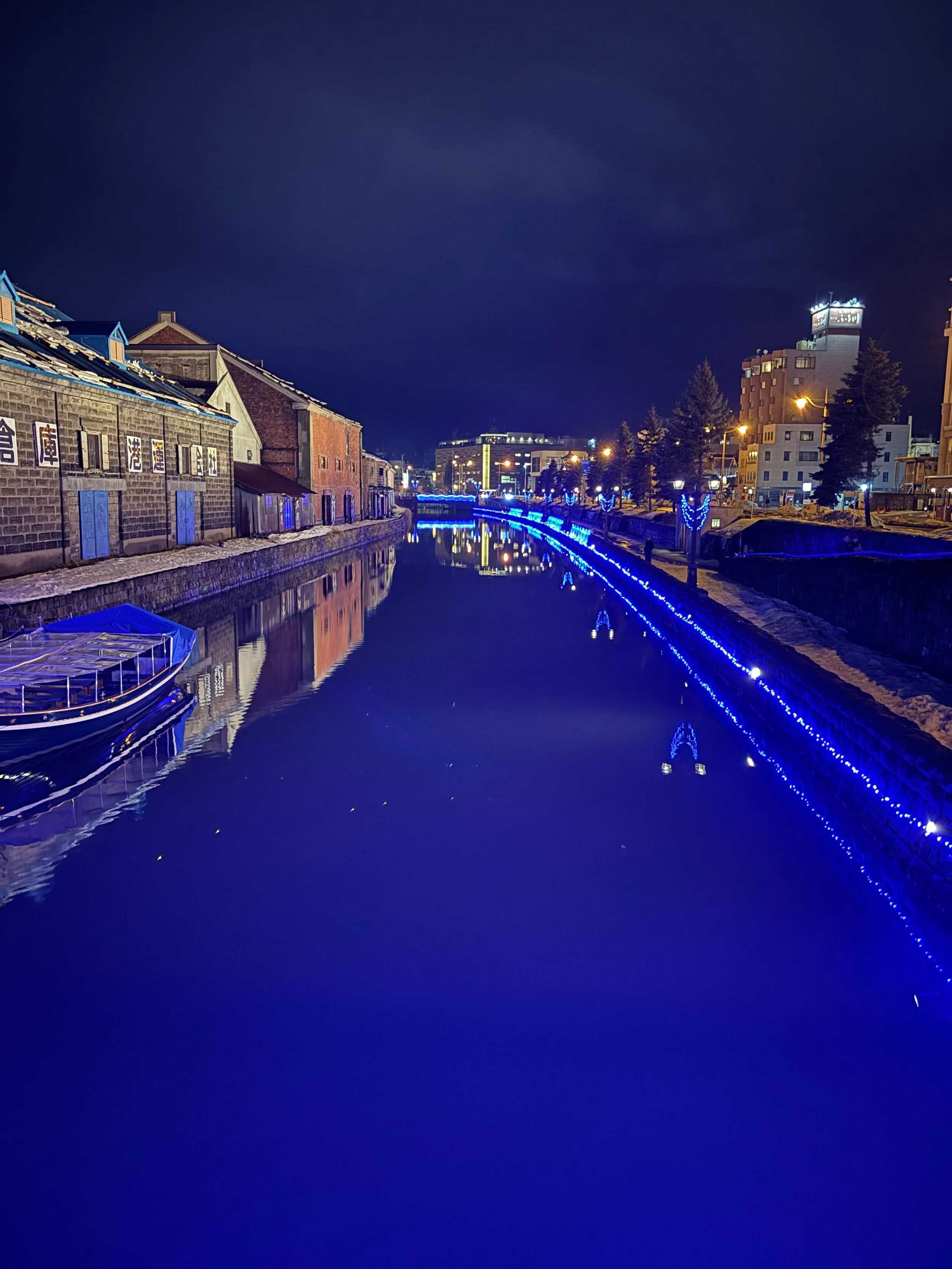
Upon putting our bags in our room and going out to walk for dinner, we quickly discovered what the town is famous for—its canal. Once a busy port town with banking and glassblowing industries, the canal is flanked by cool old warehouses built of blocky stone. Some have been converted into bars, and one is a fantastic museum called U…. (I highly recommend visiting; it's small—just two floors—with a collection of woodblock prints.) I fell in love with this art form, as I find the prints cartoonish in a way, with bold colors and precise imagery. Many of us have seen the famous Edo-period menacing blue wave swallowing up the wooden longboats, with Mt. Fuji in the background. That print (one of a thirty-something series) is a woodblock print and was a way to reproduce images. The colors remain vibrant, and the scenes feel ancient and peaceful. Choosing a favorite would be impossible, but had fun trying and left with a coffee table book of what seems to be an endless collection of woodblock-print images.
Day 7
Japan is, of course, known for amazing food, and Hokkaido, being an agricultural island region, is, by many people’s accounts, serving some of the best meals in Japan. Interestingly, it was during the opening of Japan in the mid-1800s Meiji period that the Americans showed the way to transform this northern island (whose northern shores at Otaru are just 16 miles from Russia) into something they would see as worthwhile: by implementing agriculture. Flying into Sapporo and seeing the varying greens forming a quilt of farm plots, you can appreciate how productive this land has become.
In Otaru, we had excellent curry (more soup-like here than in Osaka, which is also known for exceptional Japanese curry), ramen at the ski resort in a tomato broth, and, of course, great sashimi, and our last night in town sat in a restaurant at the chef’s counter the exact size of a standard bedroom, enjoying made to order vegetable tempura accompanied by local “pure” sake( that means it only has four ingredients, with a very specific natural yeast, that ferment the rice).
What we didn’t expect was wonderful Italian food that we stumbled upon on Christmas Eve, our first night in town after that longer-than-anticipated day of travel. This was at a small, candlelit wine bar with exposed wood beams and a library-style back room. Taru Lab opened in 2019 by an Italian from Sardinia and a Japanese woman, Asako, who had met 15 years earlier in Australia and chose Hokkaido as the place to start a wine-and-restaurant business. The fact that this couple, and one of them being a foreigner from Italy, speaks to the uniqueness of Hokkaido: it attracts (you could also say, accepts) more foreigners, making up 20% of the population—compared to the remainder of Japan—that has just an average of 3% foreign population. This aligns with Japan’s historical view of the northern island as less "Japanese" than Honshu (the main island and homeland).
For Day 7, it was a ski day, and we hit the resort closest to Otaru called Kiroro. I chose Otaru as our hub because I didn’t want to be in a ski resort setting in rapidly growing Niseko. Kiroro, known for getting tons of snow and just a thirty-minute drive from the town of Otaru, was being pummeled by snow when we arrived in our taxi. (Remember, we were supposed to have a rental car, but without that and no reservation for the coach bus (Pro Tip: always try to book and reserve whenever possible in Japan) from Otaru Station, we had to fork out for a taxi to get up there.)
In my 35 years of snowboarding in Canada, the U.S., and Europe, this quickly proved to be one of the top two days I’ve ever had riding at a resort. The first run before 9 a.m. had the sides of the piste untouched, with deep 1-2 feet of fluffy powder. It became skied over in the next couple of runs, but by lunchtime, the pockets were already getting filled in as the fat snow continued to fall. Don't just take my word, here from the jovial lifty here.
Apres ski i Japan is quite different from how it is in the West. It’s either a quick happy hour style meal in a local restaurant bar--beer/sake and then to the onsen. The routine is the hot thermal water, piping hot sauna, and a cold plunge, and repeat. Wrapped up the Hokkaido day with more sashimi for dinner. Fortunately for me, we found a place that had unagi (grilled eel), a score for me, as typically prepared in a sweet sauce that I cannot have. Needing to be up early tomorrow, as it will be a guided backcountry skiing day—was in bed by 10. After more continuous snow throughout the night, it should be a good one! Here is the guide company I landed on - Rising Sun Guides
Day 10 (Last Days in Otaru)
Two days of guided touring in the backcountry, which I had not done in 25 years, took a lot out of me, but I scored the deepest powder I’ve ever skied, and for most, what Hokkaido is all about. Yesterday, day 9, after my third day in a row of boarding in powder, we hopped on a train to Sapporo. This was an impromptu decision; having experienced Otaru and hearing that the capital of Hokkaido is a cool city, we figured, let’s check out of our modest hotel a day early and enjoy a night and a full day in the small to medium-sized city, made famous by the beer named after it.
Nestled at the base of a snowy mountain range, Sapporo was cool. Where we were had too many tourists (mainly from different parts of Asia), but it meant plenty of shopping and endless restaurants. On our first night, we were craving what Sapporo is famous for—curry. The place had a line, but they prefer you to place your order when you arrive, so we did that and then headed to a bar where we had the most incredible stout, brewed by none other than Suntory—the whiskey brand that hired Bill Murray and why he got lost in translation! The next day, we walked around and enjoyed checking out this really cool, funky '70s time capsule of a hotel. Japan had a booming economy going into the '80s; they built luxurious properties that were spacious and well-designed, with no expense spared on materials. While some of these structures may have aged, they have a retro charm that I love, especially since they have been so well cared for, as is the Japanese way.
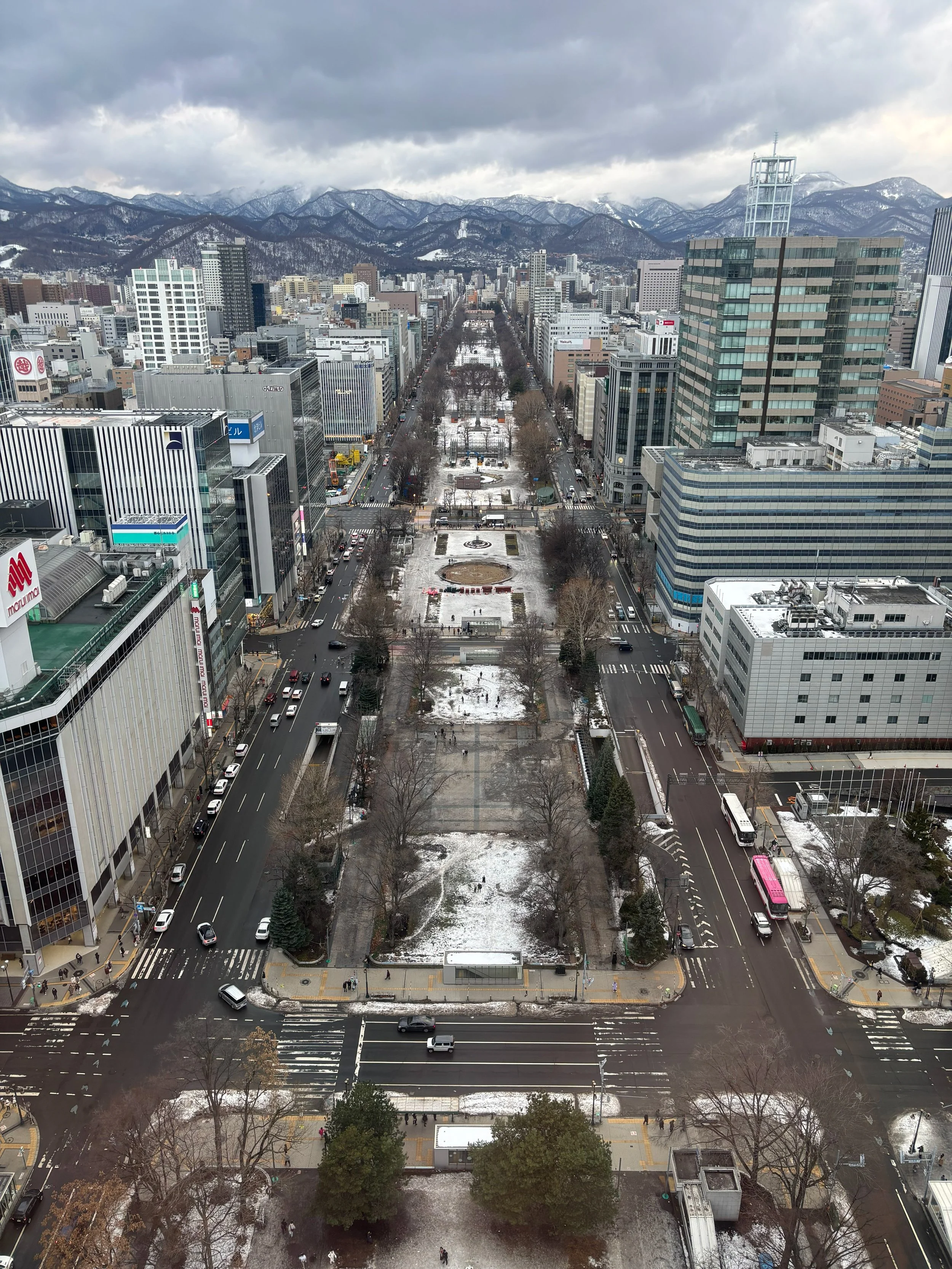
If you only have a day to check out the town, I highly encourage walking up six flights and then taking the elevator to the observatory floor of the Sapporo TV Tower. It’s a quick 45-minute activity, and like the Namsan Tower in Seoul, you can see across the entire city, grasp its topography, and into the surrounding mountains. I look forward to coming back and exploring more of the neighborhoods, getting away from the center and into more locals-only areas, and checking out Sapporo’s surrounding mountains that I hear are peppered with Onsen. We had a flight to catch, so we grabbed a taxi to the train station and back to the airport. It turned into a long night; we didn’t get on the Narita Express train to our hotel in Tokyo until 10 PM.
Day 12 (Tokyo)
A good night's sleep in a not-so-attractive hotel led us to transfer to something more elevated, with a larger room. As a solo traveler in 2022, I enjoyed the small, smartly laid-out rooms, but after a week with Deanna and our large suitcases, we didn’t want to be so cramped for our final days of holiday. After a late-night online search, we landed on the Kitano Hotel Tokyo, which I would highly recommend for a luxury hotel feel, but two times more affordable than, say, Four Seasons or Palace Hotel, which are in the same area. The vibe is elegant, featuring earthy tones and incorporating nature beautifully in the large-scale lobby windows and atrium design, which encompasses a tall swath of bamboo, and the room is spacious enough to be comfortable for our final four-night stay.
It’s located next to Otemachi, where the above-mentioned hotels are, both great to pop into for a drink, or a fancy dinner, or from high floor lobby of Four Seasons catch a view of Mt Fuji on a clear day, and not far from Roppongi or Omotesando. After dropping off our bags at our much-improved digs, we met a friend for coffee at the Park Hyatt lounge, with views of Mt. Fuji. Then checked out the Mori Art Museum on the 52nd floor of Roppongi Hills Tower, which has a gorgeous mall for high fashion and all other things shopping at the base.
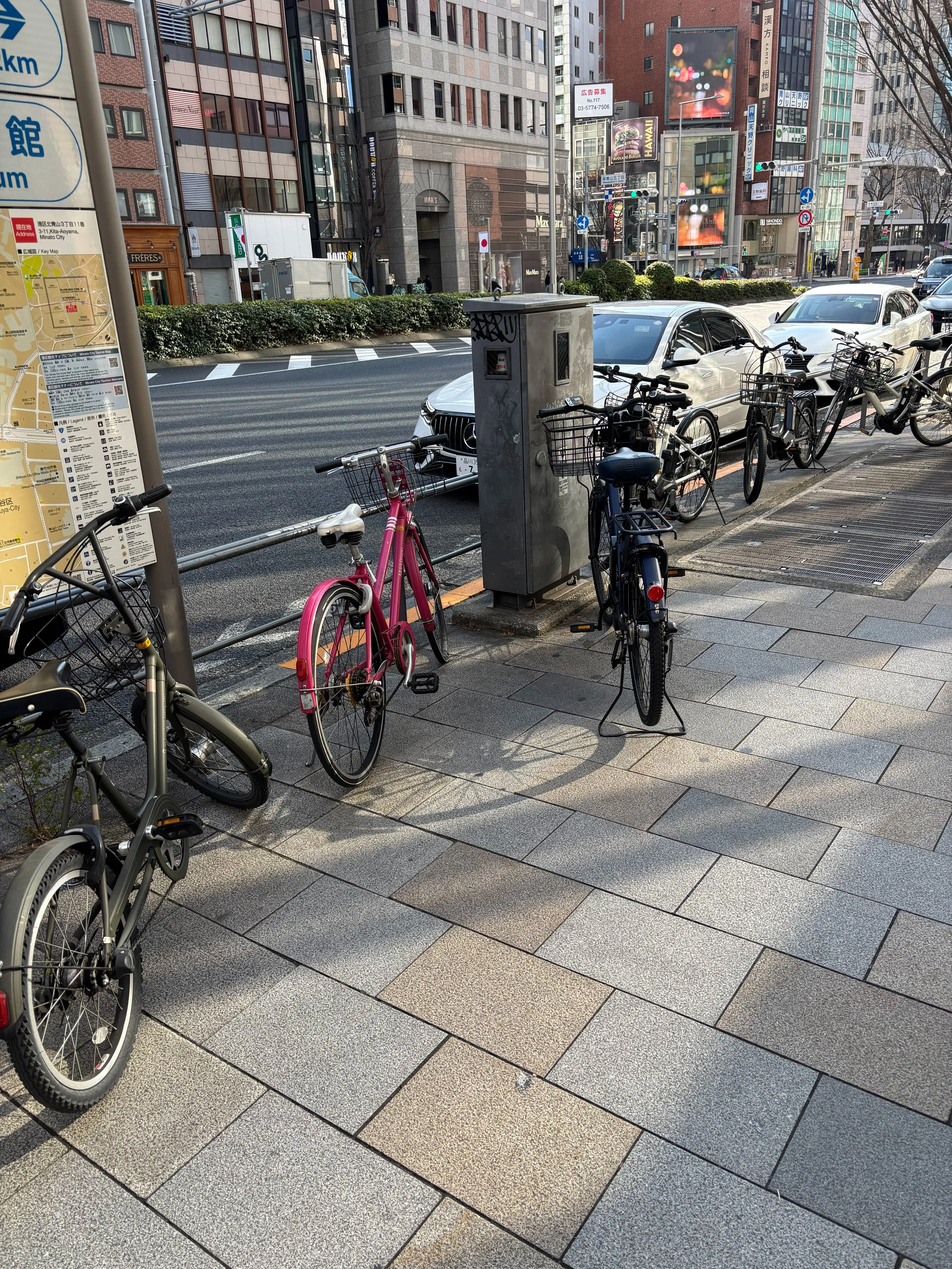
Next, we headed to Omote-Sando, a trendy shopping area that shouldn’t be missed, with its gorgeous stores, good eats, and architecture. Whether it's familiar international brands or local denim shops, you’ll be smart to go home with a pair. We tried to visit the Japanese Denim Company, but it was closed over New Year’s week (which is more of a holiday in Japan than Christmas is), and we also tried to visit Momotaro, which is currently all the rage. There was such a line that we decided to wait until tomorrow. More shopping, as the endless array of beautifully displayed, well-run shops is special and a neat experience. In the U.S., where do you buy a pair of socks at a boutique department store and receive the full attention of the smartly dressed shopkeeper? There’s no attitude, just a genuine desire to be kind, professional, and effective. Upon exiting the store, you look back and see another shopkeeper bowing some 20 yards away. This place is like no other. Even with a population of 14 million, you will notice that the bikes don’t have U-locks attached to poles and fences; they’re just parked with a tire lock.
At dinner that night at the Palace Hotel across the street from the sprawling grounds of the Royal Palace, overlooking a waterway moat, we observed the busy, wide streets with nonstop cars and buses streaming by, yet there was no audible sound other than a slight hum (it’s eligible to honk your horn, unles facingg graveb danger). It’s quiet and harmonious, as none of the vehicles are honking or equipped with obnoxious mufflers.
Day 13
Today would be a successful second attempt to score some selvedge denim, and I pulled it off back at Momotaro. What I found special about these jeans is: they're tailored on the spot on this old-fashioned-looking sewing machine, they provide a lifetime warranty with repair, and the branding is based on this mythical legend of a boy who was born from a peach and becomes a triumphant warrior. Afterwards, and still only lunch hour, we made our way out to Asakusa, to look at woodblock art prints, which we got turned onto back in Otaru at the museum. This hub for the 1800’s art form that is slowly being revived by an American expat named David Bull: check him out here. His shop is like an academy for art form, and he will gladly give you a deep dive into its origins and how folks like himself are given wood block prints a resurgence. We rode the train there, which, if I haven’t mentioned yet, is a fast and extremely efficient way to get around Tokyo. I get a Passo card and fill it with a few thousand yen. Google Maps is very detailed about routes, down to which exit number to take when leaving the station.
Being lunchtime, and having like the peach boy been through what felt like a battle to get those jeans, as we left the Asakusa station and before going to meet Mr Bull, it was time for a Udon noodle lunch. And as she always does, Deanna found the bomb spot serving what I had been craving—a sesame-based sauce: Udonya Yaezakura. New-looking in light oak and white, Udonya Yaezakura is one of those spots where, after you pay for what you want at a vending machine outside, a ticket is spit out. The chef-owner, who was cooking (of course), explained it’s not a paste but actually ground sesame seeds. Accompanied by a few pieces of tempura, this lunch was delicious, and literally was paid for by rounding up the coins in Deanna’s purse.
Conveniently, the woodblock shop is near a very large, popular Buddhist Temple called Asakusa Sensoji Temple, and what is likely the largest Uniqlo store in the world. At the temple, which in my opinion was too big and packed—especially on NYE day —you can partake in Buddhist rituals that include burning packs of incense or throwing coins, and there also seemed to be areas for getting a prayer you draft wrapped around a panel at the temple exterior.
Tokyo for NYE is not a huge party city; for the Japanese, the days around the holiday are family time, and many leave the city to go home and have a few days of rest. We started with a modest Yakitori dinner, which was delicious. Around 11, we hit the Four Seasons and headed up to the lobby bar on the floor 60-something floor. As you may have heard, Japan is generally seen as affordable, but as more people realize this, more tourists are arriving, and prices seem to be rising-at least I thought so comparativelyed to my first visit (for that trip and if you care to hear more about Kyoto and Osaka, check that blog here, appropriately named: Two Weeks of Harmony in Japan.
It was fun to reconnect with a familiar face, a world-renowned bartender named Keith. He’s a talented and outgoing mixologist who opened the hotel bar during COVID and is now managing all bar and beverage operations across the hotel's multiple food and drink venues. Keith helped us secure a great lounge seat with stunning views across the city towards Tokyo Tower and the city’s twinkling lights. It was the perfect spot to unwind.
Day 14-16
The last few days of our trip, I became awfully ill with a bad, achy flu, so I mainly holed up in the Kitano Hotel room. Of any room to be holed up in, none other than the Kitano is where I would want to be. Though one could say the updates are nearing the line of tiring a tad, but I find is Japan they build with such quality that the spaces preserve themselves so well and remain elegant and refined. Smartly designed with a partially open bathroom vanity area, whose counter-to-ceiling mirrors are reflective on the vanity/bath side, but decorative facing the bed. Then there are the finishes: warm yet elegant, with oatmeal hues and dusty rose accents and the furniture in oak. The carpet is decorative with cherry blossom motifs in a tasteful soft pearly/pink color. Still, it was a rough couple of days.
After two days of being sequestered, the saving grace was on Friday the 2nd, the night before we would fly out—it began to snow in Tokyo. The flakes were the fluffiest, whitest, brightest you could imagine. Against the steely blue skyline visible from our nearly wall-to-wall window, the scene was calming and magical, and from what we heard a rare occasion to have snow in Tokyo--a place that has such serenity to it. Horns are rarely used, mufflers never make a peep, and aside from the occasional siren or train cars rustling as they pass, it’s a silent environment. It’s an atmosphere I was happy to return to, and enjoying it with my partner made it even more meaningful.
On the flight home, as I wrap up this blog, Japan is still on my mind. I know there is more to see in Korea and other parts of Seoul, and Hokkaido feels barely touched by us—like just reading the preface of a new book. And like a book, upon finishing them, don’t you find that you feel less in the know? It makes you even more curious about new subjects broached. That is Asia for me. So let me say, until next time. Kamsahamnida... Arigato… may this land remain subarashii!