Gehry Dies at 96, Invloved in Numerous Projects at Time of His Death
Frank O. Gehry, one of the most formidable and original talents in the history of American architecture, died on Friday at his home in Santa Monica, Calif. He was 96.
Meaghan Lloyd, his chief of staff, confirmed the death, following a brief respiratory illness.
Mr. Gehry’s greatest popular success, and the building he will be most remembered for, is the Guggenheim Museum Bilbao. Set in what had been a dying industrial city on the northern coast of Spain, this wildly exuberant, titanium-clad museum was an international sensation when it opened in 1997, helping to revivify the city and making Mr. Gehry the most recognizable American architect since Frank Lloyd Wright. Its joyful appearance, a composition of glittering, silvery forms that looked as if they had burst out of the ground, seemed to signal the arrival of a new, emotionally charged architecture.
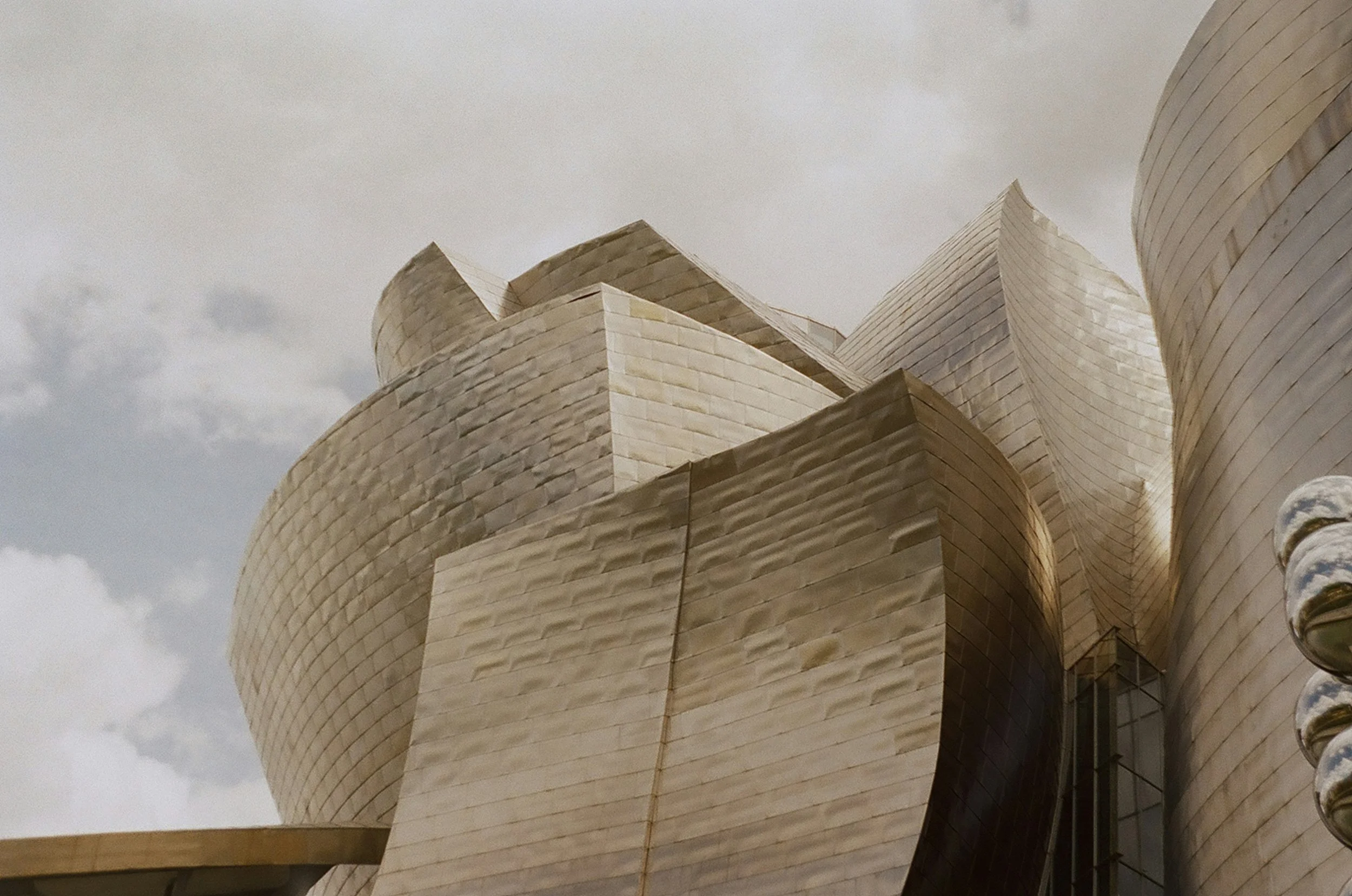
Mr. Gehry, one of the first architects to grasp the liberating potential of computer design, went on to create a host of other celebrated buildings, many of them widely regarded as masterpieces, that in their sculptural bravura and visceral power matched or even surpassed the Baroque architecture of the 17th century.
These included the Walt Disney Concert Hall in Los Angeles, with its cocoonlike interior, completed in 2003; New World Center (2011), a concert hall in Miami stuffed with cylindrical rehearsal halls; and the Fondation Louis Vuitton (2014), a museum in Paris so ethereal that it looked as if it were made of blown glass.
But Mr. Gehry, who won the prestigious Pritzker Architecture Prize in 1989, had made his name long before then. He burst into the consciousness of the architectural world in 1978 with the completion of a Santa Monica, Calif., house that he designed and lived in for four decades — a cheap, wood-frame Cape Cod bungalow that he ripped apart and enveloped in a new skin of plywood, corrugated metal and chain link.
The crude, even violent collision of forms seemed to capture the political and generational rifts that had been straining American society, and the American family in particular, since the 1960s, and it established Mr. Gehry as a force in architecture.
Over the next few years, he produced several more houses whose raw compositions evoked structures in midconstruction. Philip Johnson, architecture’s elder statesman, tried to describe the feeling of being inside one of those houses: “It’s not beauty or ugliness,” he told The New York Times Magazine in 1982, “but a disturbing kind of satisfaction that you don’t get in anyone else’s spaces.”
“I was rebelling against everything,” Mr. Gehry said in an interview with The Times in 2012, explaining his antipathy toward the dominant architectural movements of the time, as exemplified by the Farnsworth House on the Illinois prairie, a stark, flat, steel-and-glass Modernist pavilion by Mies van der Rohe.
“I couldn’t live in a house like that,” he said. “I’d have to come home, clean up my clothes, hang them properly. I thought it was snotty and effete. It just didn’t feel like it fit into life.”
Mr. Gehry later expanded his repertory with increasingly sculptural designs. They included the contorted white stucco forms of the Vitra Design Museum (1989), in Weil am Rhein, Germany, and two cylindrical towers joined in a wild, balletic embrace in Prague — a 1996 building called the Dancing House, or Ginger and Fred, after the dancing duo Ginger Rogers and Fred Astaire.
For some, his work was more sculpture than architecture. Others saw it as emblematic of a global culture that reduced architecture to a form of branding. Mr. Gehry, whose name was recognized around the world, was sometimes derided as a “star-chitect.”