Croatia By Motorcycle in Seven Days
Starting a week-long motorcycle tour across Croatia on Saturday. Ahead of saddling up, our group of seven riders is rendezvousing in Zagreb, the capital. I flew in on KLM from LA via Schiphol—the LA leg was 10 hours, followed by two more from Amsterdam. For late May, the weather just broke into the high 70s as of this week, and spending the afternoon walking around the city center felt great in a long-sleeve T-shirt. Although you may be zonked from the time change, the best way to get on track is to refuse to nap, which is exactly why I immediately hit the streets to stroll around.
*If you came here to just read about the motorcycle tour, feel free to jump ahead to Day 1.
My first impression is that Zagreb looks a bit like Milan. It features historic architecture tagged at its base with crappy graffiti. The buildings are not quite as grand and the city isn’t as bustling, but it's that specific edge and slight grime that brings the industrial energy of Milan to mind. I walked for about four hours. I started by popping into the Zagreb Cathedral; with its two towering spires, it’s hard to miss. They were doing restoration work, so I was able to see the original wood beams extracted and piled visibly out front. It was the same with the giant copper bells—you could see all the fine details of their hardware that you would never catch a glimpse of when they're actually installed.
From there, I meandered up the winding street of Tkalčićeva, which is filled with vibrant cafes and bars, all boasting outdoor seating. The street snakes upward and has a classic European vibe. Further up that road, I passed near the "Bloody Bridge" (Krvavi Most), which isn't an actual bridge.
Today, but a historic spot where two rival sections of Zagreb's old citizenry used to conflict. Right around that corner, you can enter the Grič Tunnel. Built as a WWII bomb shelter, it's now used as a pedestrian underpass that connects you straight to the Upper Town, letting you pop out about 200 yards on the other side.
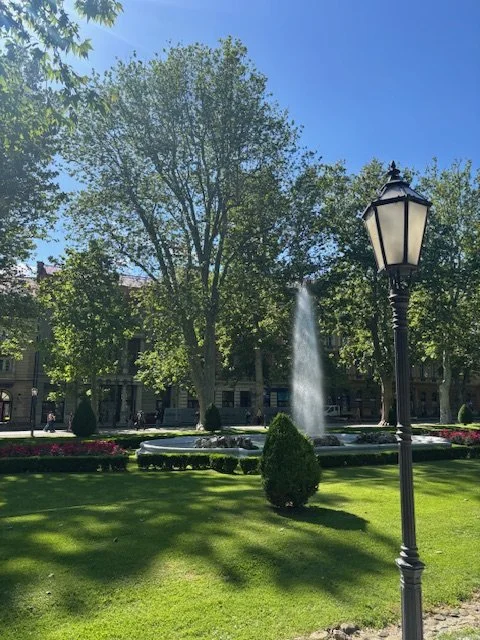
While the museums aren't massive, the Archaeological Museum sits right on the lovely, rectangular park of Zrinjevac where the historic Glazbeni (Musical) Pavilion is located. All around these parts are great shops, cafes, and beautiful architecture. A real treat was hearing opera music and realizing it was being sung live from an upper-floor window. I sat at the cafe below the building, learned the music was coming from a music school upstairs, and enjoyed the beautiful opera verses mixed in with other students practicing their instruments. The spot was Verdi Caffe Bar—maybe you'll get lucky with a live street concert like I did.
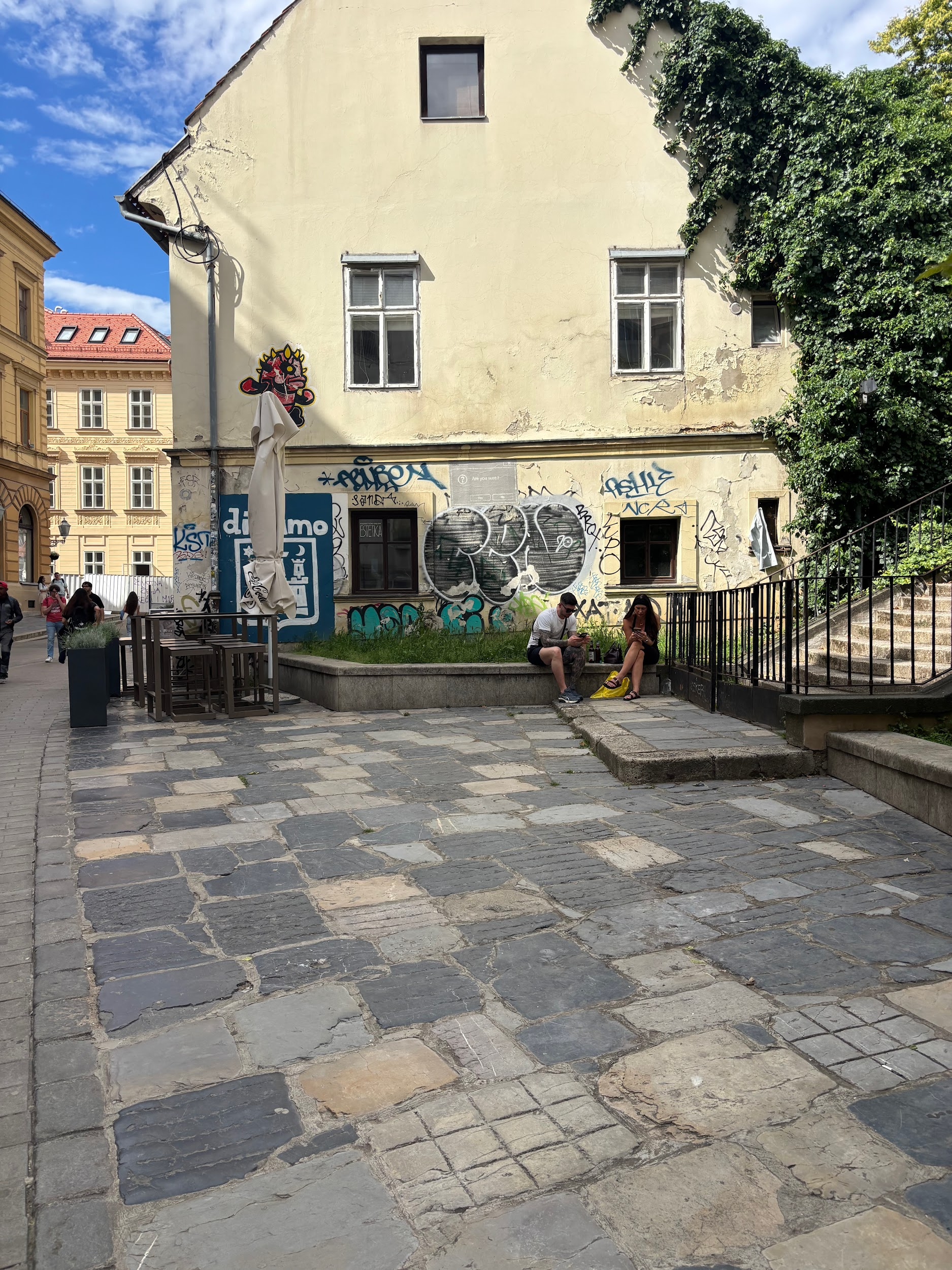
My second day in Zagreb—the first actual full day of the trip—consisted of two guided walking tours. I stumbled onto a great new travel tip: book these directly with the actual guide on an app called GuruWalk rather than going through a massive agency.
The morning tour was with a bright, young guide named Katja, who led a fantastic gastro- and food-themed route. While you can easily check out all of these spots on your own, you’ll miss the crucial context and local perspectives. Zagreb’s city center is highly localized and easy to tackle in a few hours; given the relative lack of major museums, these walking tours are truly the best way to learn and explore.
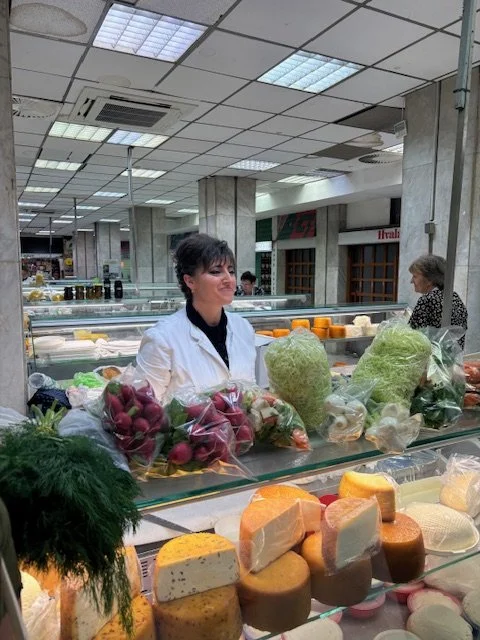
Our first stop was the famous Dolac Market, located just above Ban Jelačić Square—or simply "The Square," as the locals call it. The market is divided into a few distinct sections, including dedicated spaces for flowers, fruit, meat, and dairy. A major perk of being with Katja was that she hooked us up with samples at every single stop. The nuts, figs, and cherries stood out from our first tasting. Funny enough, the climate and terrain in Zagreb are so conducive to figs that you’ll actually see fig bushes growing directly out of the old stone walls of decaying buildings.
Next was the meat market, which was packed with various types of prosciutto and ham, including a unique kind of dried, minced meat and a crispy, fried pancetta snack. Down in the dairy hall, we tried unpasteurized soft cheese topped with cream and salt. While there, we spotted a highly industrious stall owner selling "under-the-table" chickens. She had turned her dairy kiosk into a complete one-stop shop, even crowding her display cases with fresh veggies. Known for showing up to work in full makeup every single day, she was easily the busiest vendor in the market.
Afterward, I walked through the WWII tunnel for the second time and toured the Upper Town, which can be accessed via a historic funicular or a quick stair climb. The Upper Town is filled with gorgeous, classic European Renaissance architecture. As is common here following the two earthquakes that hit the city in 2020, many of these historic structures now house government and EU offices.
In between the morning and afternoon tours, while still exploring the Upper Town, I happened across a museum dedicated to the legendary Croatian cartoon artist, Otto Reisinger. He drew extensively in the 1960s and 70s, using a style reminiscent of The New Yorker or Playboy, and highlights the unique mentality that is easily noticed in the Croatian people—slightly sarcastic, or as Steve called it, "edgy."
Our afternoon tour was with a local gentleman who gave us further perspective on the unique Croatian mentality—specifically, how deeply in tune they are with their leisure time and how much less they are motivated by strictly capitalist goals.
He shared some fascinating history about Zrinjevac Park (formally Trg Nikole Šubića Zrinskog), the beautiful park I had been crossing constantly since I arrived. I learned that the historic, glass-and-stone encased clock sitting at its northern edge was actually a gift to the city back in 1884, and it functions as a fully operational meteorological station, tracking temperature and barometric pressure.
It was a great cap to our time in the capital. But after being shown the WWII tunnel for a third time, I knew it was officially time to fire up the motorcycles and begin exploring the rest of Croatia.
Day 1: Zagreb ➡️ Šibenik
Now for the real reason behind this Croatia trip: the open road. We kicked off our seven-day BMW motorcycle tour at 9:00 AM sharp, rolling out from RockerMoto, a top-tier bike rental shop in Zagreb run by a gentleman named Kris. RocketMoto gives you options—they can either set you up with independent bike rentals or provide a dedicated guide to lead the way. We opted for the guided experience, letting them map out the routes and book all the hotels. For seven days of riding, excluding food and gas, it totaled just under $3,000 USD. Our guide, Robert, was handpicked for his seasoned, mature temperament—a perfect fit for our crew, which averages in the late 50s. Together, the seven of us quickly earned the nickname "The Magnificent Seven."
Our destination for day one was the coastal historic town of Šibenik, with a route planned through the absolute must-see wonderland of Plitvice Lakes National Park
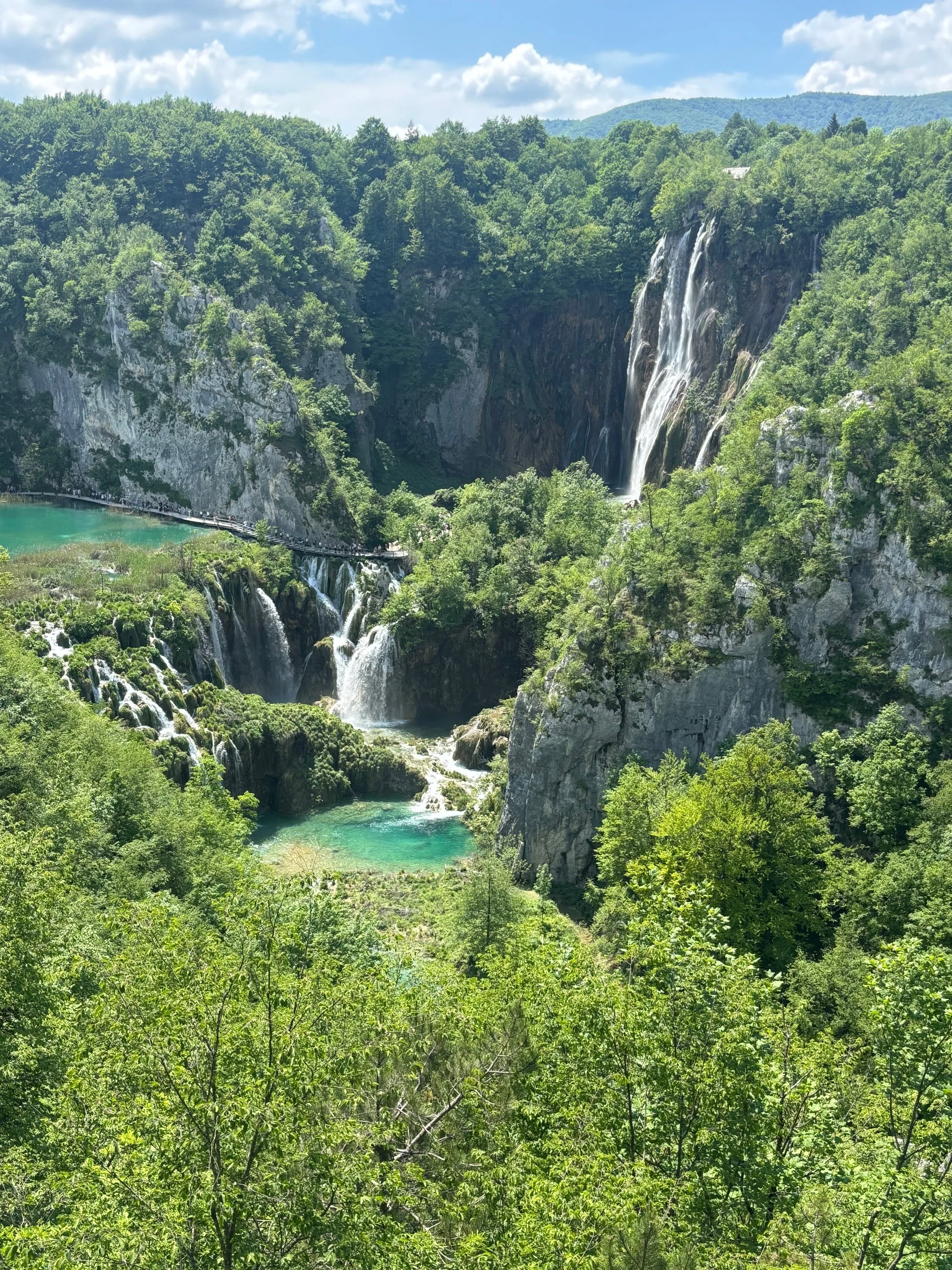
En route to the surreal, cascading fairy world of Plitvice, we made a pit stop in a picturesque little village called Rastoke. Sitting about 30 minutes outside the main national park, Rastoke lets you cross the river via wooden bridges and watch waterfalls rush directly beneath a handful of local cafes. While the park itself features hours of beautifully groomed, nearly paved walking trails leading down to the iconic, multi-tiered falls, we opted for a quick scout—snapping a few photos before saddling back up to keep moving. It was a good call because our next stop was, in my opinion, more interesting: off the beaten path, and stunningly raw.
I have to say, touring on a modern, precisely engineered piece of German machinery is a sensation everyone should experience at least once. I’m riding a BMW R 1250 GS. The torque is unbelievable; you can absolutely haul ass in third gear, barely revving the engine at 3,000 RPMs, and cruise effortlessly at 75 mph. The bike is a fine-tuned, chiseled beast. I was thrilled to find that our route avoided major highways almost entirely. Instead, we stuck to beautiful two-lane roads that, once clear of the city, are bordered by vibrant green fields rolling through dramatic valleys, mountain passes, and flat stretches where you can click up into 6th gear and watch ancient medieval stone walls flash by.
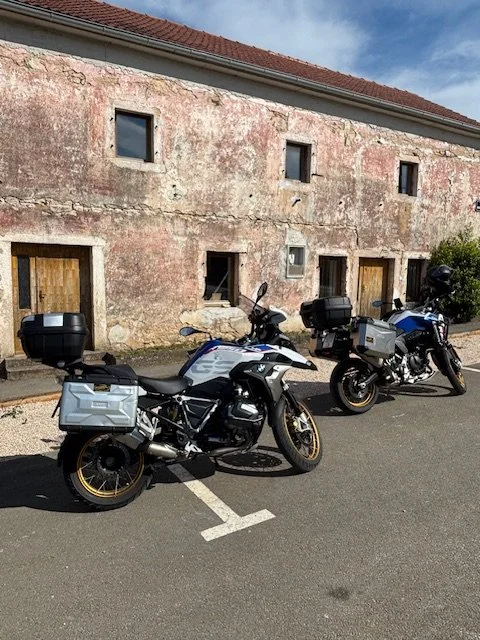
Our hidden detour via the winding, narrow, sand-colored switchback road, which tested your low-speed first-gear turning skills, brought us to the Krupa Monastery, a historical Serbian Orthodox site established in 1317, nestled along the Krupa River. The area features a handful of original Ottoman-era stone buildings, around a still-functioning monastery built in 1836.
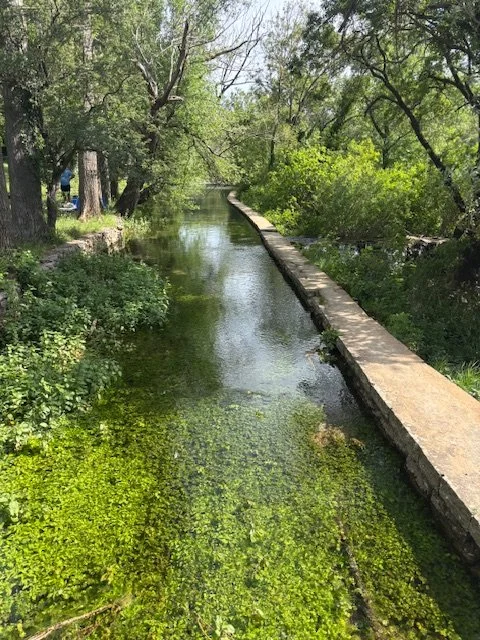
There was a tiny outdoor kiosk nearby with picnic benches where a local woman was brewing legitimate, strong, dark Turkish coffee. There might have been a dozen people total in the entire valley while we passed through. Walking into the monastery grounds felt like stepping into a fantasy novel, with the adjacent river completely shrouded in deep, rich greenery.
By late afternoon, we crested the hills and descended into Šibenik, and took a peak across the straight from the lookout at Hotel and Oyster Bar.
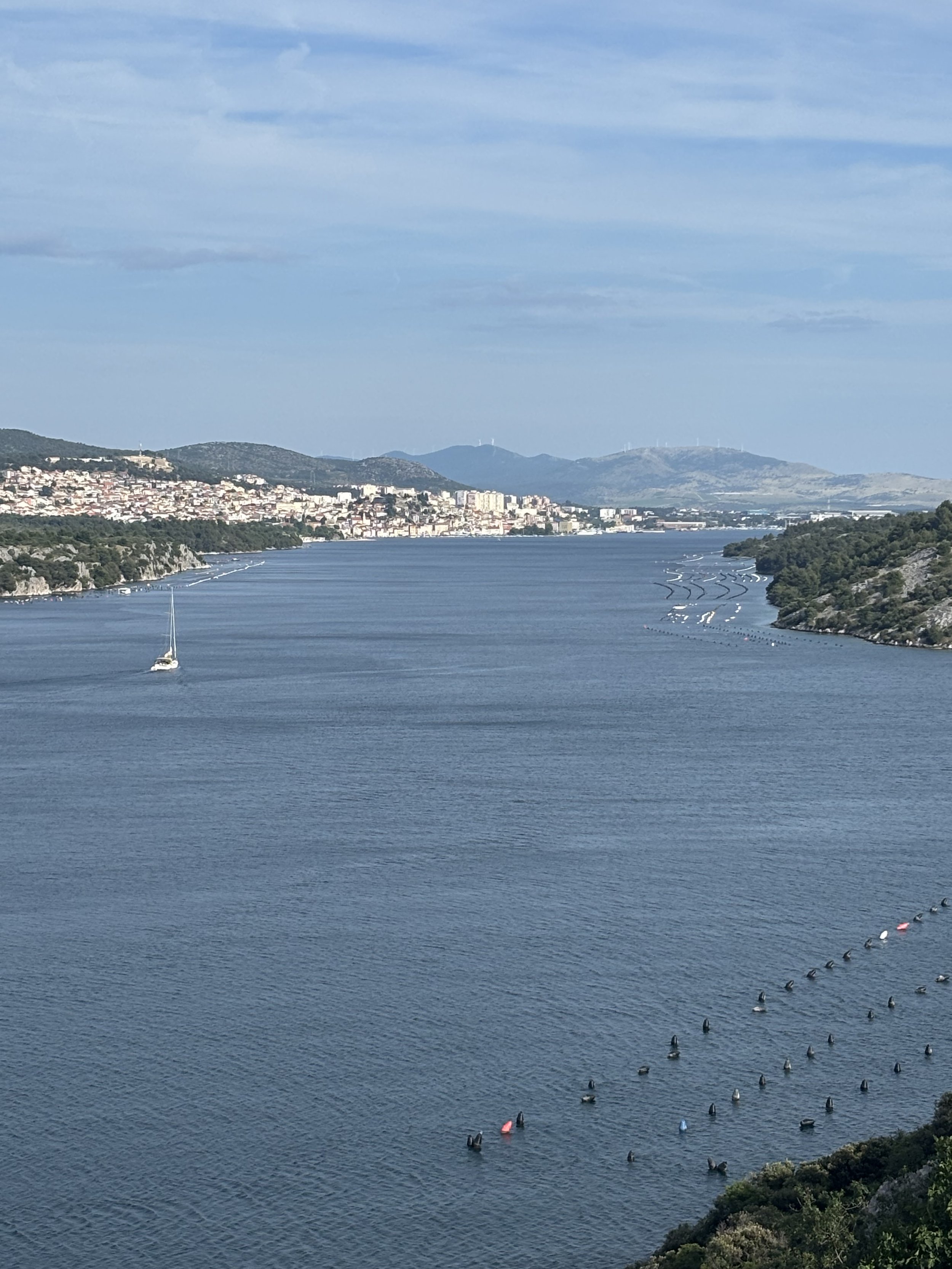
Bridge to Sibinek
Šibenik is a mid-sized, but not too touristy, port town, boasting two distinct UNESCO World Heritage sites: The Cathedral of St. James and the St. Nicholas Fortress. While the Cathedral is a quick, beautiful walk from the center of town, the massive fortress guards the mouth of the channel coming in from the Adriatic Sea on a small island between two landmasses, so you would need a guided excursion to view it.
Day 2: Šibenik ➡️ Dubrovnik
Each night's stay on this road trip seems to be about 300 kilometers apart. Day two was on the lighter end of that mileage, but as you can imagine, with seven guys, getting geared up after stops, refueling, and taking coffee breaks can still eat up a chunk of the clock. Fortunately, the group didn’t lag. Everyone was on the same page—efficient and conscious of group riding etiquette. Knowing none of the seven except my cousin Steve, it’s in a good group of guys, with a variety in riding levels. Personally, I’d sold my last bike about 18 years ago and only had a couple of practice days in the months preceding the trip. I’m glad I didn’t let that deter me. Anyone can become a good rider with training, track days, and practice. These BMW bikes are easy to handle, and in a group with a mellow guide like Robert, it feels very comfortable.
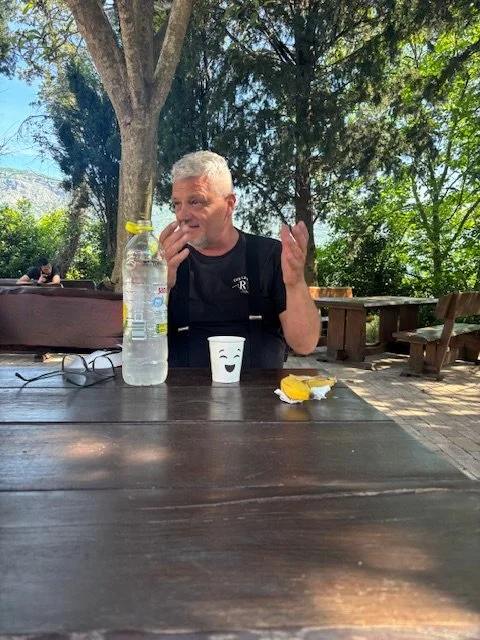
Robert our Guide
Robert has the patient, knowledgeable characteristics that a great guide requires. While he does motorcycle tours occasionally, his main gig these days is working as a skipper on sailboats.
During our ride, he shared a couple of unbelievable stories from his past. He explained that early in his career, he had a corporate job at McDonald's. A plane carrying a group of the franchise executives went down right here in these mountains, killing everyone on board. Robert was supposed to be on that exact flight, but he missed it simply because they were late turning off their grill equipment, which, as a McDonald's franchisor, they were using to host these delegates from the US—a twist of fate that saved his life.
He also gave us a sobering look into his family's history during the communist era. Robert’s grandfather was murdered by the former Yugoslav leader, Josip Broz Tito. Tito was such an incredibly influential and dominant force in the region that the Balkan Wars erupted not long after his death as a sign it was he who had bound it together. But as Robert’s family experienced firsthand, Tito maintained his control through a strict policy of allowing no contenders to his power. Anyone smart, capable, or seen as a potential threat to the regime was systematically held back or simply rubbed out.
Leaving Šibenik by 8:00 AM, the road quickly wound upward away from the shoreline and we merged onto an actual highway—something I wasn't entirely sure existed out here. Two lanes in each direction and a speed limit of 130 km/h (about 80 mph). I opened up the throttle on the GS and hit about 175 KM/hr. By 10:30 AM, we rolled into Makarska.
While I’ve never been to the Amalfi Coast, we have all seen the photos, and that is exactly what these coastal Croatian towns bring to mind. Makarska sits nestled along a potato-shaped bay backed by a large stone boardwalk where local kids were diving off the docks into the sea. The main marina stretch of retail and outdoor dining spans nearly a mile. At its right tip, the harbor gives way to a rugged monument and a rustic, unpaved park area that lends the town an almost Sicilian feel. It makes sense; we are sitting just 50 kilometers across the Adriatic Sea from Italy, so the Mediterranean terrain naturally mirrors it with lush green pines, olive trees, and leafy flora.
The local community here felt well-off, effortlessly fashionable, and unhurried—yet unpretentious. Cafes were filling up with mature groups of friends dressed in light sweaters and classic whites, sporting cool sunglasses. They were doing what Europeans do best: sitting on cafe patios, smoking, talking, and genuinely enjoying life and each other's company. After grabbing a quick bakery snack and an espresso at a local cafe, we headed straight up into the towering mountains looming directly over the town. These cafe patios are absolutely everywhere in Croatia. If they don’t serve their own food, you are permitted to bring your own in, such as good from a bakery to enjoy with your beer or coffee.
The next leg was slow, demanding first- and second-gear precision to navigate the dramatic switchbacks up to Skywalk Biokovo, which I would highly recommend - https://maps.app.goo.gl/yUr1uqaMH9GDm1kFA
Sitting at an elevation of nearly 4,000 feet, the peak features a breathtaking horseshoe-shaped glass observation deck that cantilevers directly out over the massive cliffside, giving you the sensation of walking on thin air over the sea. It struck me while up there that I didn’t choose the guys to see all these marvels with, but I hoped on the trip I would be thrown in with them.
When with a group you had just met a few days ago, the trip provided lots of moments while unsaddled to chit-chat and get to know someone. And there’s always a fear that it will be all 'bros' and frat-like attitudes—but with us, fortunately, not the case. Greg became my accomplice in taking in the finer parts of the architecture. An actual architect himself from Toronto. On our first day in Zagreb, he took on a lobster-beat-red sunburn, which, when I think about it, still hasn't subsided. He's a skilled rider, but perfectly happy taking second-to-last in the pack.
For the final afternoon stretch, we made one last fuel stop just before crossing the spectacular Pelješac Bridge. This modern, cable-stayed engineering marvel was built specifically so travelers could bypass the Bosnian border corridor at Neum. A few decades ago, drivers bypassed it due to the tensions of war; more recently, it was simply a logistical nuisance involving two separate border checkpoints within 20 minutes of each other just to remain on the coastal route. Now, this stunning bridge allows you to glide towering over the blue waters of the sea, riding across the Pelješac peninsula before a shorter bridge carries you back to the mainland—and as th Craot’s would prefer—no Bosnia (yes, there is “divide” there).
As the late afternoon sun began to cast a warm, golden glow across the coast, we finally rolled into Dubrovnik. Entering the area, a couple of massive cruise ships looked impossibly squeezed into the city's quaint, historic harbor—a striking welcome to the "Pearl of the Adriatic."
Day 3: Dubrovnik to the Border
Most of the group wanted a slower morning, so three of us, led by Robert, headed a couple of hours down the high-cliffside coastal Road to southern Croatia, literally shaped like a spear, to a fortress from 600 years ago. With scaffolding from an ongoing renovation that seems to never finish to let us climb around inside. Through the lookout windows across to Montenegro, you could see the first town nestled into the bay. On way out, hit another fortress at the top of the mountain with more paved switchbacks to get up there.
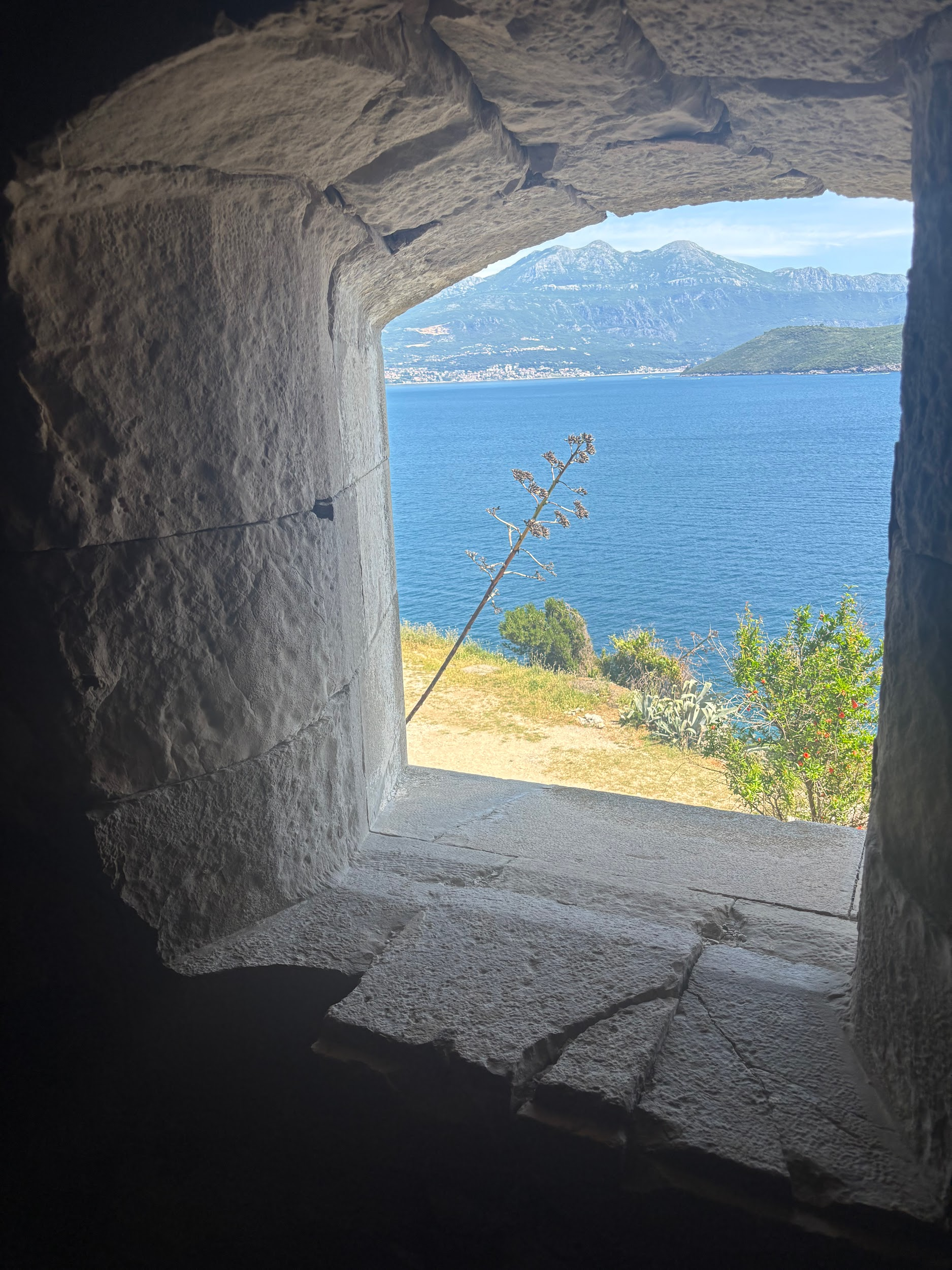
Peak-a-Boo to Montenegro
After 2 1/2 days of riding this afternoon, it felt good to get the gear off, put the sandals on, and walk around the city center, which I really liked, and was happy to skip what for certain would have been. More came with tourists to the old walled city in Dubrovnik. Walking on the street takes you down to a little cove with the city beach and a promenade, where you can walk up to many entrances to enter a quiet rock area for yourself and swim.
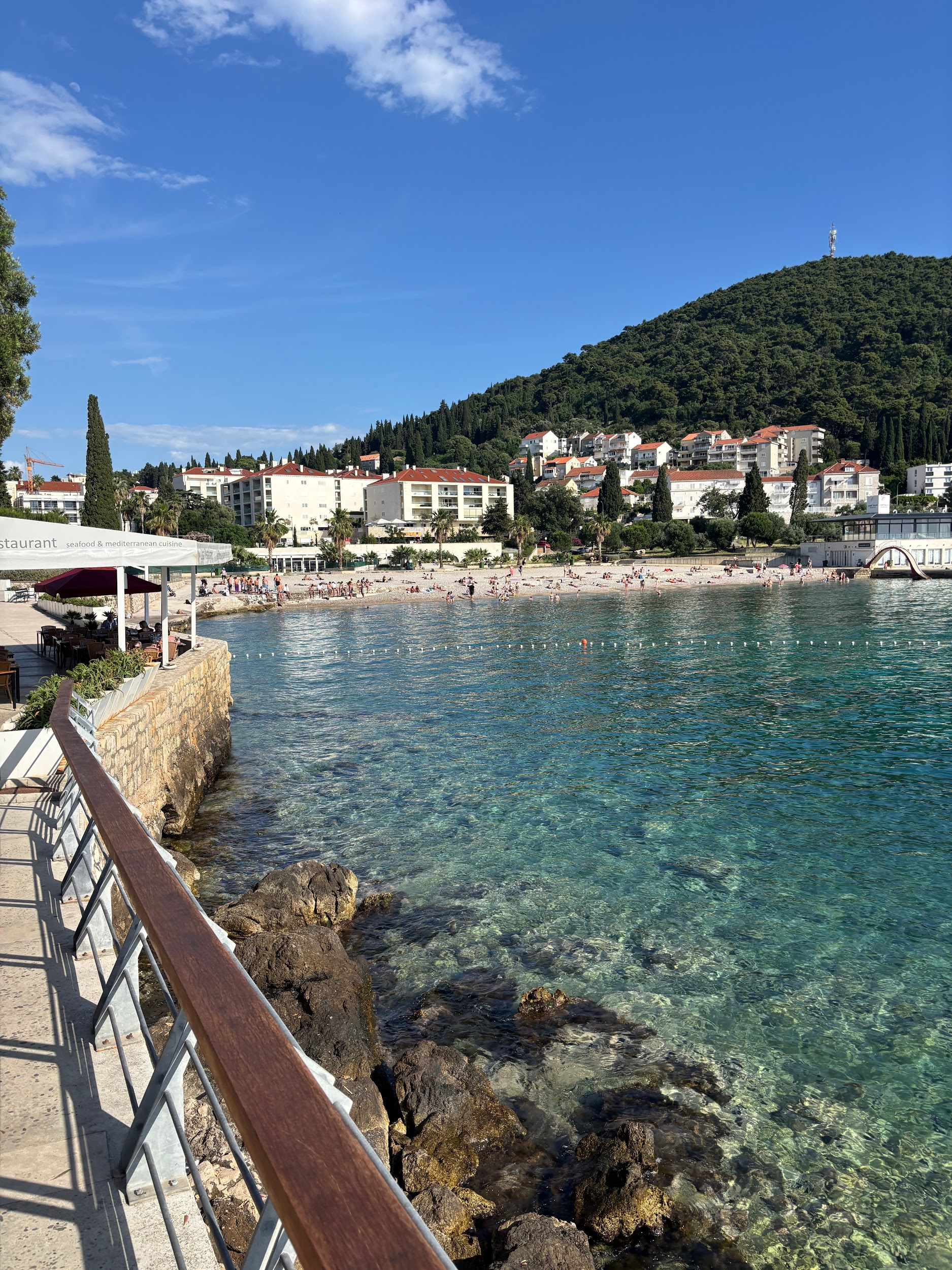
Dubrovnik City Center Beach
Day 4: Dubrovnik to Hvar Island
The vantage point of being on a bike—looking down into the coves as you pass them, or as you approach to stop—is the ultimate way to see a place with topography like Croatia's. If you sailed into it, you would be looking head-on, with more of a mountain view rising above you. As motorcyclists, we say we’re in the movie, opposed to just watching it. Here, you feel the vibrant turquoise color of the water, smell the locals burning brush, and experience the contours of a rock face to a much higher degree. The disadvantage is an accident, which, fortunately, none of us has had. But a bike lean over can easily happen. This is when going super slow, when turning it around to park, or approaching a stop, your feet aren’t properly beneath you, and the weight of the bike becomes too much to prop up. This happened to John at the turn from town getting onto the main road. But true to his first responder nature, Mark, who works in Toronto as a paramedic, raced over first to assist. He’s the guy who usually travels with a first aid kit—the reliable type. Great, I noted that sticking to the staggered riding formation a group our size should maintain while on the road. He likes to be up front, and while there, he stuck to his post.
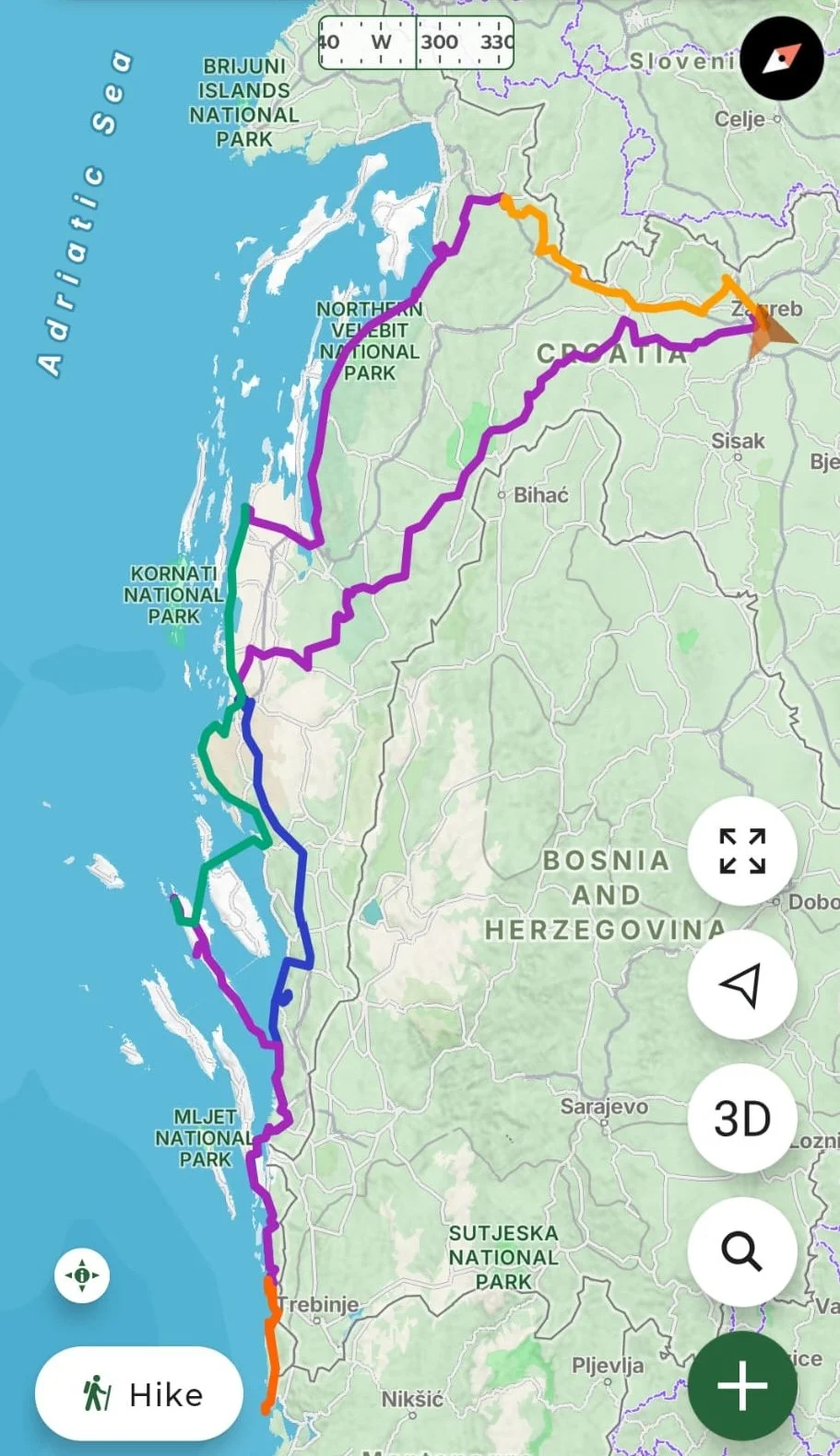
Our Seven Day Tour
We arrived at Hvar Island via ferry around midday. Strategically hanging back to let all the cars get far ahead of us on the windy roads, we disembarked and enjoyed some of the best riding of the trip—so far. It was a spectacular mix of corkscrew turns, ascending and descending through the hilly coastline with massive, bright blue views of the Adriatic stretching out beside us.
We eventually stopped for lunch on the more rustic, southern side of the island, where we treated ourselves to an incredible local caper and anchovy pizza, literally on a picnic the beach, with bench-type seating with a little sun shade canopy above as the Adriatic light winds licked our cheeks. I was telling Deanna about John, that I could picture myself looking like him at 70. He’s the oldest, slender, and a great rider who’s toured Thailand and just returned from South Africa. He lives in Boca, Florida, but feels more like he’s from somewhere more salt of the earth, like Pennsylvania, and that he would own an engineering firm of some sort that paves roads. He has that weathered, get-it-done vibe. His wife turned him into a benign kosher eater, so he’ll have veggies while out as his best attempt to avoid being unkosher.
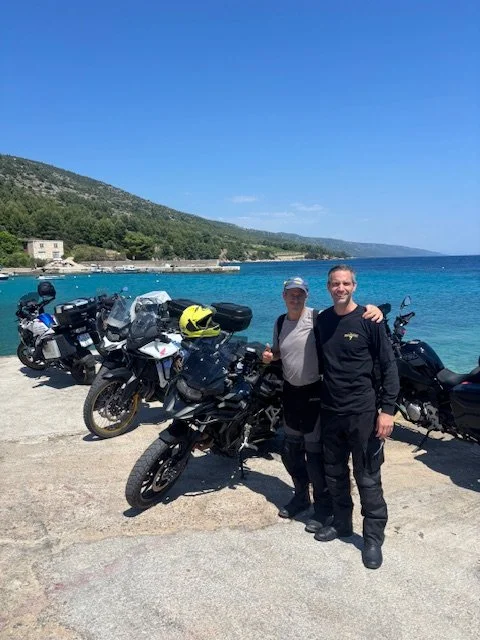
John and I
By about 5:00 PM, we rolled into the main hub of Hvar Town. We headed straight up to the Spanish Fortress (Tvrdjava Fortica) perched high above the harbor. From up there, you get a perfect view of the luxury yachts gleaming in the tight, tourist-filled bay below. The names of the massive sail-and-power boat yachts suggest Russians, but Robert reminded me that the Croatian Slavic language can be misleading in its Russian-sounding nature.
After making it to our lodging, the coolest hotel of the 7 day called Pharos - Hvar Bahill Hotel
Every detail of the room and design was thought out, and we took very refreshing swims in the sun-soaked pool looking over a row of olive trees towards the sea. If coming to Croatia, it could be a great bet to book a night or two here.
After we strolled down into the town to check out the action, grab a bite to eat, and explore. We kept walking until almost midnight. While a nightlife scene isn't really our vibe, it’s cool to see. It was made popular when Jeff Bezos was encouraged to visit Croatia by all the Croat skippers around the world, and he would hang out at this one longtime-running night spot. The real “charm” is found just one row of buildings behind the main boardwalk. It’s a bustling network of narrow, alley-like streets packed with a couple dozen bars and restaurants.. The tables are squeezed tightly into the stone walkways, making it the ultimate spot to sit back, have a drink(s), and people-watch as the endless stream of tourists snakes through the corridors.
Day 5: Hvar to Zadar w Split
As I was saying, it’s the little off-the-bike chats I found myself in each day that shed light on each of the guys’ stories. For example, Victor, who rode a bit slower at the back but was never bothered by it, let me in on why he knew so many of the iconic LA roadways like Mulholland. It stemmed from his only daughter battling anorexia. He could have it all—a thriving swag production business and a gift of early retirement—but seeing his only daughter suffer through that clearly shaped him. He is someone who sheds adversity like oil does to water. A trait I could use more of.
Today we got an earlier start than usual, hitting the road at 7:00 AM for a short, 30-minute ride to reach the ferry on our way to Split. The 90-minute crossing was smooth and provided the perfect opportunity to pull out the laptop and catch up on some work. Unsurprisingly—as Europe always seems to be a step ahead of North America in this department—the cellular service was strong enough to get an excellent hotspot connection right on the water.
This was our day to check out Croatia’s second-largest city. Situated right on the coast a few hours north of Dubrovnik, Split is still very much a part of the Dalmatian region. Like almost every coastal town here, it features a massive, walled old city filled with tourists. As John pointed out later that night, the history of these towns is that they essentially functioned as independent fiefdoms. With no massive, unified nation to protect them, being on the coast meant you were on the front lines. If you had prime waterfront access, you could guarantee people would attack, so walled city fortifications were a survival requirement.
I’m really glad I stuck around for the guided walking tour of Split’s old city. It was fascinating to hear about the 4th-century Roman Emperor's residence, and his obsession with building his retirement fortress using materials he brought back from his campaigns in Egypt—including imported granite columns and a 3,500-year-old black sphinx.
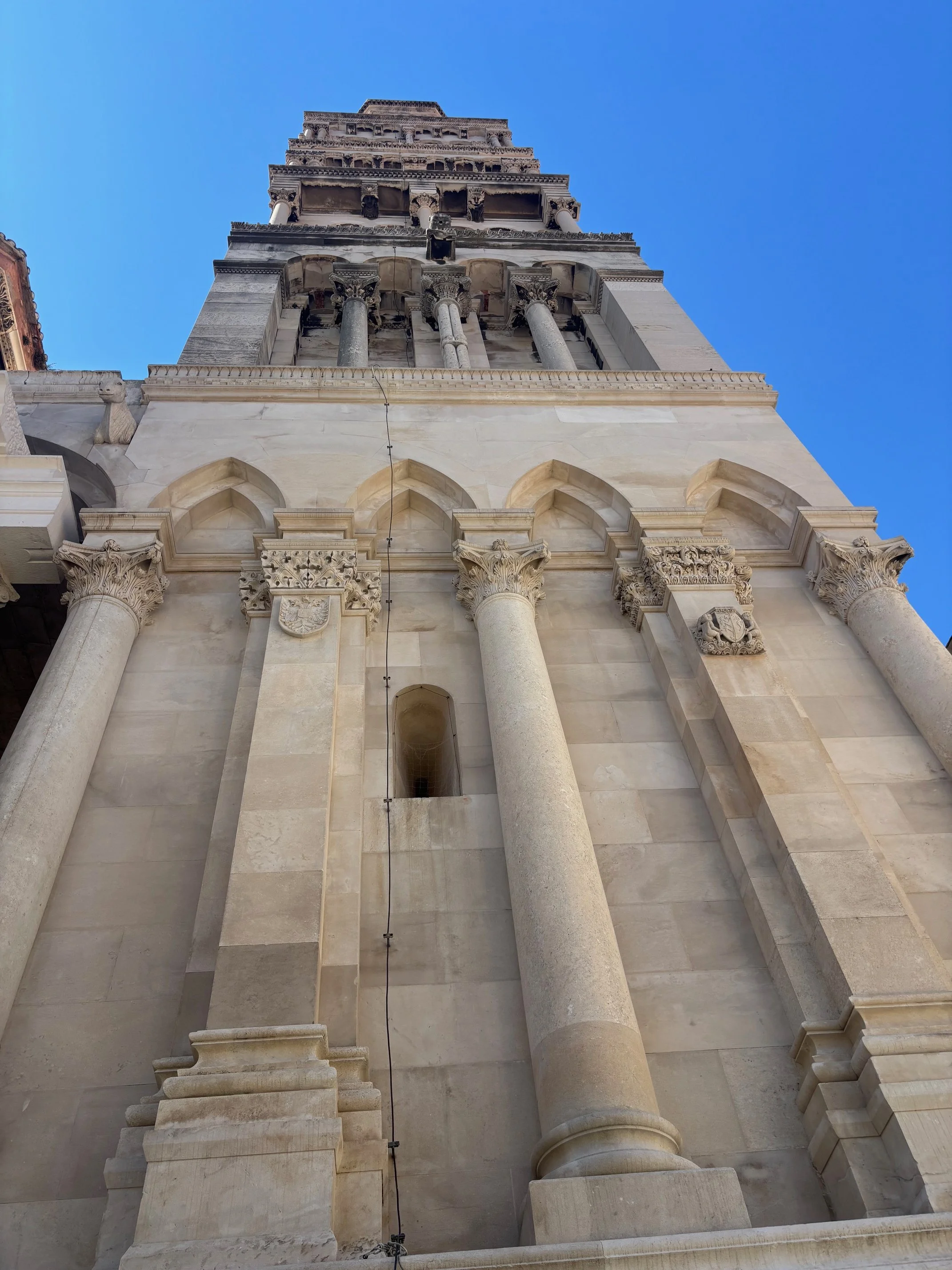
Limestone at it s best - Split
To be honest, the main town of Split felt a bit too busy and commercialized for my taste. Even though a place like Dubrovnik is also a major tourist hub, I lucked out by skipping the old town walls there and really enjoyed the main city center beach as shared from day 3. In truth, it’s the smaller, less-frequented bays and towns like Makarska or Šibenik that I found I preferred. And that includes our incredible lunch stop, located about two hours south of Zadar. It's a gorgeous little town called Primošten. Maybe two dozen boats total were moored in a cozy, protected harbor. After a plunge in the water, sitting by that quiet bay was a moment in my life I shouldn’t forget. After, I dried off by lying out like a seal baking on the warm limestone boardwalk. For lunch, I grabbed a classic Croatian favorite—a flaky, triangular burek pastry filled with a kind of light, salty cottage cheese.
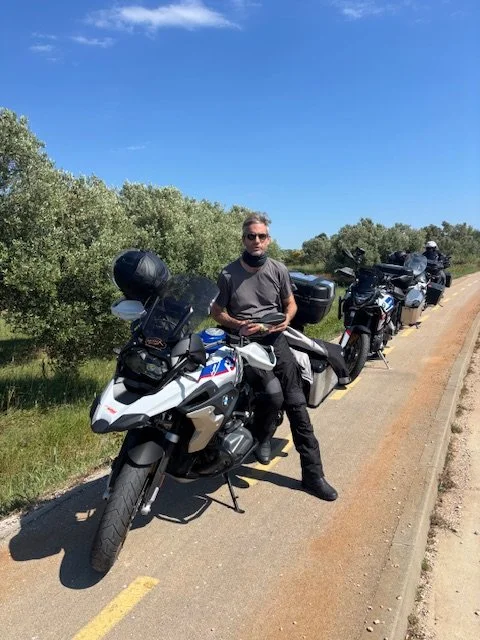
On The Road (across from The Love Island (Galesnjak)
Thinking ahead to our last supper back in Zagreb, it was Alex who shared how much he learned and appreciated from the group. Born in Russia, raised in Israel, and built a business in Toronto selling window treatments. You could say he was the cool guy on the trip. Our very first group call on Zoom, he took it from the back of a taxi in Aruba. Stylish think glasses, a tatted sleeve on his left arm—he’s the guy you can count on to join you at the nightclub if you have an itch to scratch. The thing about this trip is that everyone has different riding abilities. Alex, for example, just started riding three years ago and bought a Harley (no the best for technical training), but every day I could see him putting in the work in the turns, looking ways to improve. If I ever get to Aruba, I’ll have to go see the house he just redid down there and how his right arm sleeve turned out, which he’s stopping by Munch on way back to Canada to have tatood.
Day 6: The Adriatic Coastal Road
Later start for our second-to-last day of riding, and boy, what a day this would be. Today would bring us onto one of the absolute best motorcycle roads in the world: the Adriatic Coastal Road, AKA: D8. About an hour outside of Zadar, we crossed an inlet on a newly built, copper-red bridge reminiscent of the Golden Gate—built to replace the original structure, which was bombed during the Balkan War. Once on the other side and dropped down to near sea level, we were on.
Known for approximately 1,000 approximately KM’s of winding, arcing asphalt, it is shoulder-to-shoulder with a sheer rock face on one side and the sea just meters away on the other. The road corkscrews relentlessly, and as we headed north, an aquatic straight on your left and the steep, imposing mountain face on your right. We tackled it in three intense, half-hour stints, alternating the lead rider. Tighter and more technical was the first stint, working mostly between third and fourth gear, as we soon found our rhythm in the curves. The road opened up, turning into a much faster flow where we were mostly flying in fifth gear. Completely blew our minds, as we exuberantly shared at each rendezvous point, like schoolchildren bouncing off the walls with excitement. It pushed our skills to the limit as we weaved over the flawless pavement, sun on our faces, completely locked into the exhilaration of the ride.
Geographically, it is a fascinating area shaped by the notorious Bura wind, which can clock speeds well over 200 km/h. Looking across the strait, you see a low island mountain range rising just a hundred feet or so above sea level. The face of the island, looking toward us, was completely stark and bare—not seen thus far in Croatia—the moon-like white, chalky-brown color. Our guide explained that the strong Bura winds blast over the mountain peaks, stripping the seaward rock completely bare of soil and vegetation. Meanwhile, all that topsoil is deposited on the sheltered, opposite side of the islands, leaving it rich, green, and full of plant life.
A good lunch in the classic seaside town of Senji led us on our final stretch of the day into the higher elevation, and more forested roads en route to a mountain called Delnice. On a chairlift-ski hill that hasn’t been open due to reduced snowpack, but with stunningly quiet, green, blanketed, rolling mountains in this alpine setting for the final night on the road, was just what the doctor ordered.
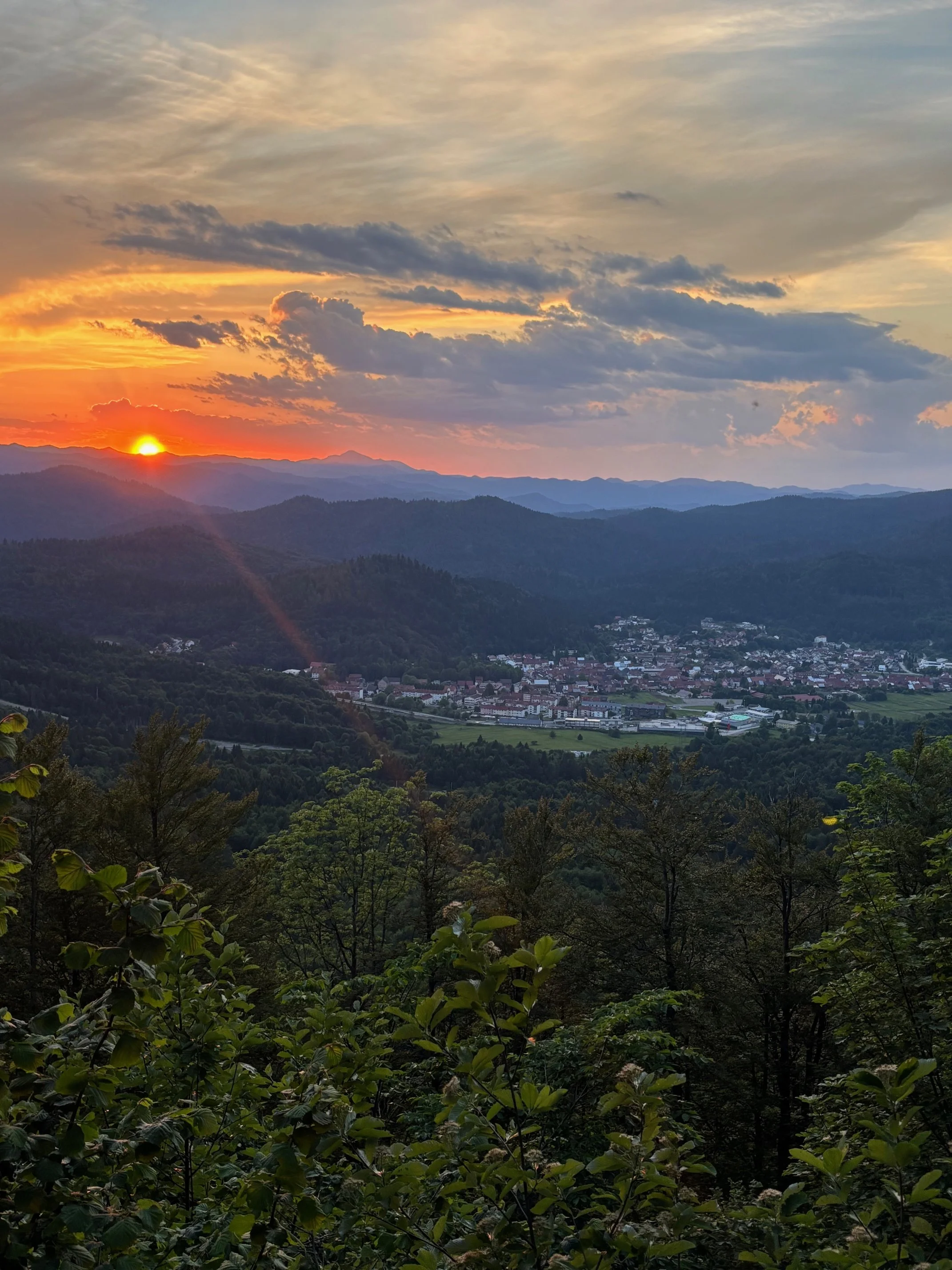
Looking north to Slovenia
Day 7: Delcine in The North Back to Zagreb
What a treat it was to sleep in the cool, quiet higher elevation, with only the birds chirping. I woke up early but felt energized for our final stretch back to the capital.
As any good getaway allows time to reflect. Coming to Croatia with my cousin Steve—whom I have only had moments of fraternal time with throughout life—as is the case when you live in different countries—this ride was a meaningful chance to get to know him—and in parallel, myself better. He talks a ton, everyone knows this after 10 seconds of meeting Steve, who's now late 50s, willing to share with the waiters at any cafe his experience of being a heart patient from a cardiac attack at 50. Looking back on our family's past and how he became so strong-willed and determined, I didn't always fully understand it. But bearing the fruits of it here in Croatia gave me a deeper appreciation for his caring—even, most would say, abrasive—nature. It’s no wonder his now-four-adult kids have grown so wise, ambitious, and cool. From making full throttle passes through small coastal towns to racing through open fields and sharing lunches, I learned so much about him, and therefore about myself. Our blood bond is strongly intact.
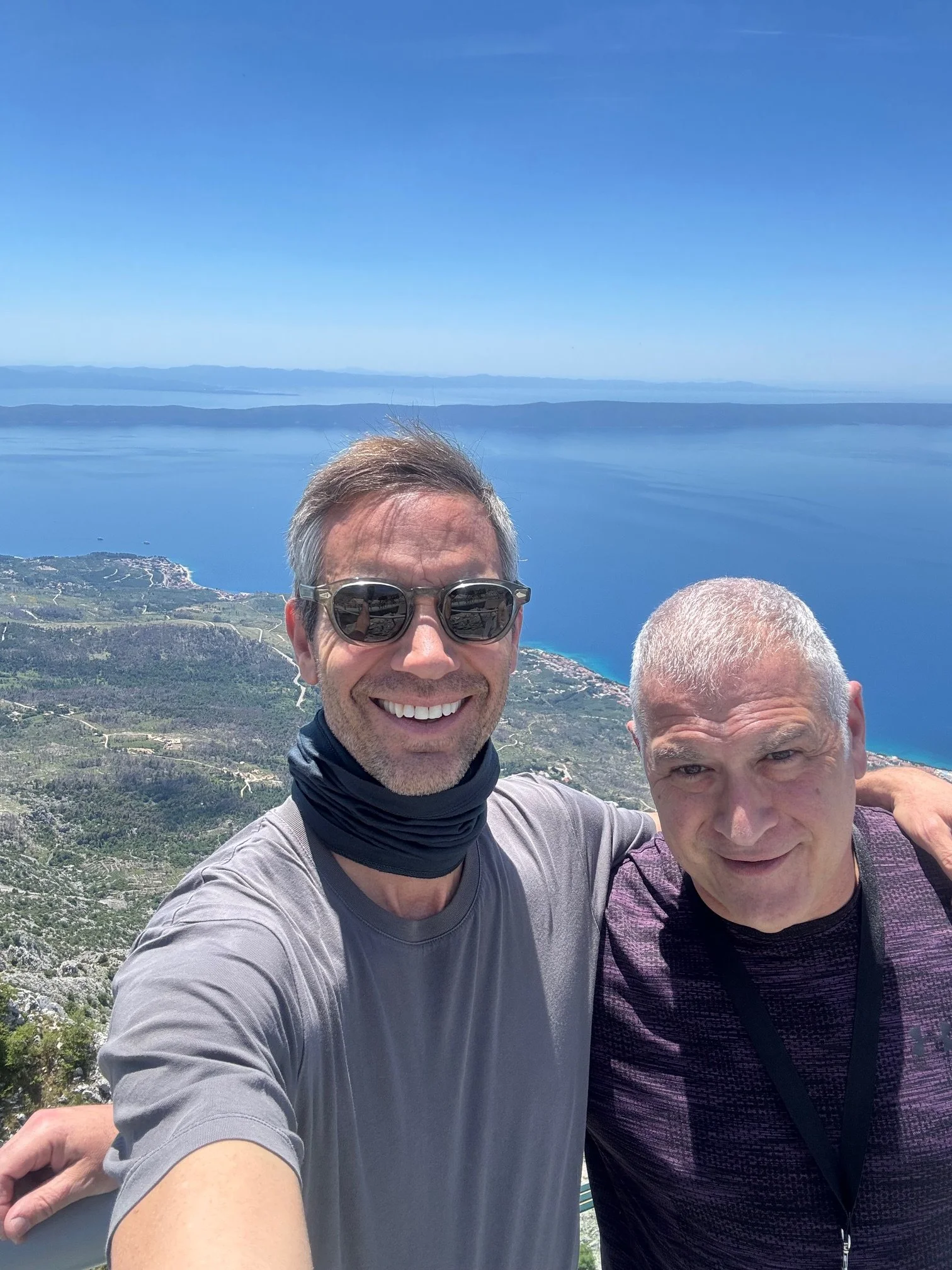
Cugino Steve and I
Final Thoughts: The Salt, the Sea, and the Open Road
Having exceeded my expectations, I now understand why Croatia has been a buzzword in the travel world over the last decade. It offers the comforting familiarity of Europe, but weaves it together with the intriguing, layered history of the Balkans—carrying echoes of its former light communism alongside Austro-Hungarian, Turkish, and Mediterranean influences. I came across a fascinating stat: Croatia has one of the lowest divorce rates in the world. The explanation was simple: expectations among couples are clear; there’s a shared commitment to the family unit as seen in other Catholic countries, and when the man pulls their weight, they thrive, and women don’t fuss or fidget with it. The people here just seem incredibly comfortable in their own shoes. They are rugged, outdoorsy, seafaring people with a deep sense of identity. People who have survived huge historical struggles. They hold dear exactly what they have.
It’s funny how traveling works. It usually takes a few days to fully shake off the daily grind and drop into a true vacation mentality—to feel like you are exactly where you’re meant to be. It took me a second to catch that rhythm this trip. But once I fully dropped in—out on the open road, feeling the sun, and breathing in the salt sea air—it took hold of me. It’s left me wanting to come back again. And funny enough, while waking late in the Zagreb Astoria for one more day before flying out, I noticed myself anticipating Steve's excited voice filling someone in on a guy he knows, or a trick to get around a foreign place—or foreign government—and with what tech gadget, or a connection to a wealthy secretary to some arms dealer who's on speed dial. But I drifted back into images and sounds of the 1250 GS: the road, the trees, and that aquamarine Croatian coast.